




Why Copper Peptides Matter for Skin Repair and Renewal
Copper peptides like GHK-Cu reliably stimulate collagen and elastin production, support extracellular matrix stability, and protect skin from oxidative damage, leading to measurable improvements in firmness, wrinkle depth, and healing when used consistently over weeks. Dissolving oral strips make those same peptides easier to use correctly every single day by removing dosing guesswork, preparation steps, and behavioral friction, so the biological mechanisms have a stable signal to work with over time.[1]

How Copper Peptides Rebuild Skin
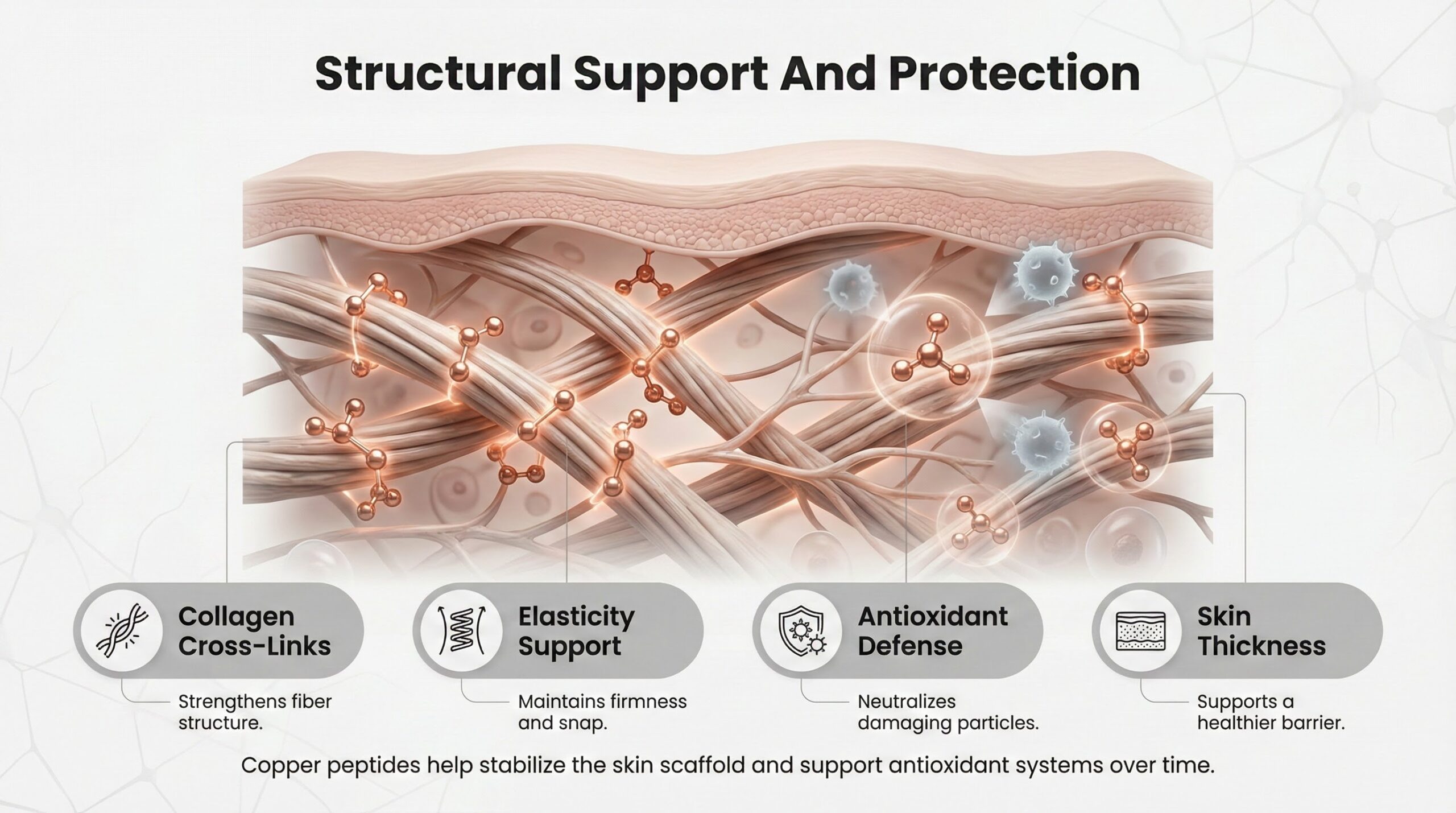
Copper peptides signal fibroblasts to increase production of collagen and elastin, reinforcing the skin’s structural framework and improving firmness and elasticity over sustained use. This activity supports smoother texture and reduced appearance of wrinkles as the dermal matrix becomes denser and more organized.
- Copper acts as a cofactor for key enzymes involved in collagen formation and cross-linking, helping new collagen fibers form strong, stable triple-helix structures.
- GHK-Cu also promotes balanced remodeling of the extracellular matrix, supporting synthesis while regulating degradation pathways for ongoing renewal rather than short-lived effects.
Structural Support and Protection
Copper-dependent enzymes help create durable cross-links between collagen and elastin fibers, which determine whether new tissue holds up under daily mechanical stress or breaks down prematurely. By stabilizing this scaffold, copper peptides contribute to skin that resists sagging and fine-line formation over time.
- GHK-Cu enhances antioxidant defenses, in part by supporting systems like superoxide dismutase activity, which reduces oxidative stress that accelerates visible aging.[2]
- Clinical and translational research in dermatology shows copper peptide formulations can improve skin thickness, elasticity, and wound repair, turning these mechanisms into repeatable, real-world outcomes when dosing is maintained.
Why Delivery Systems Matter
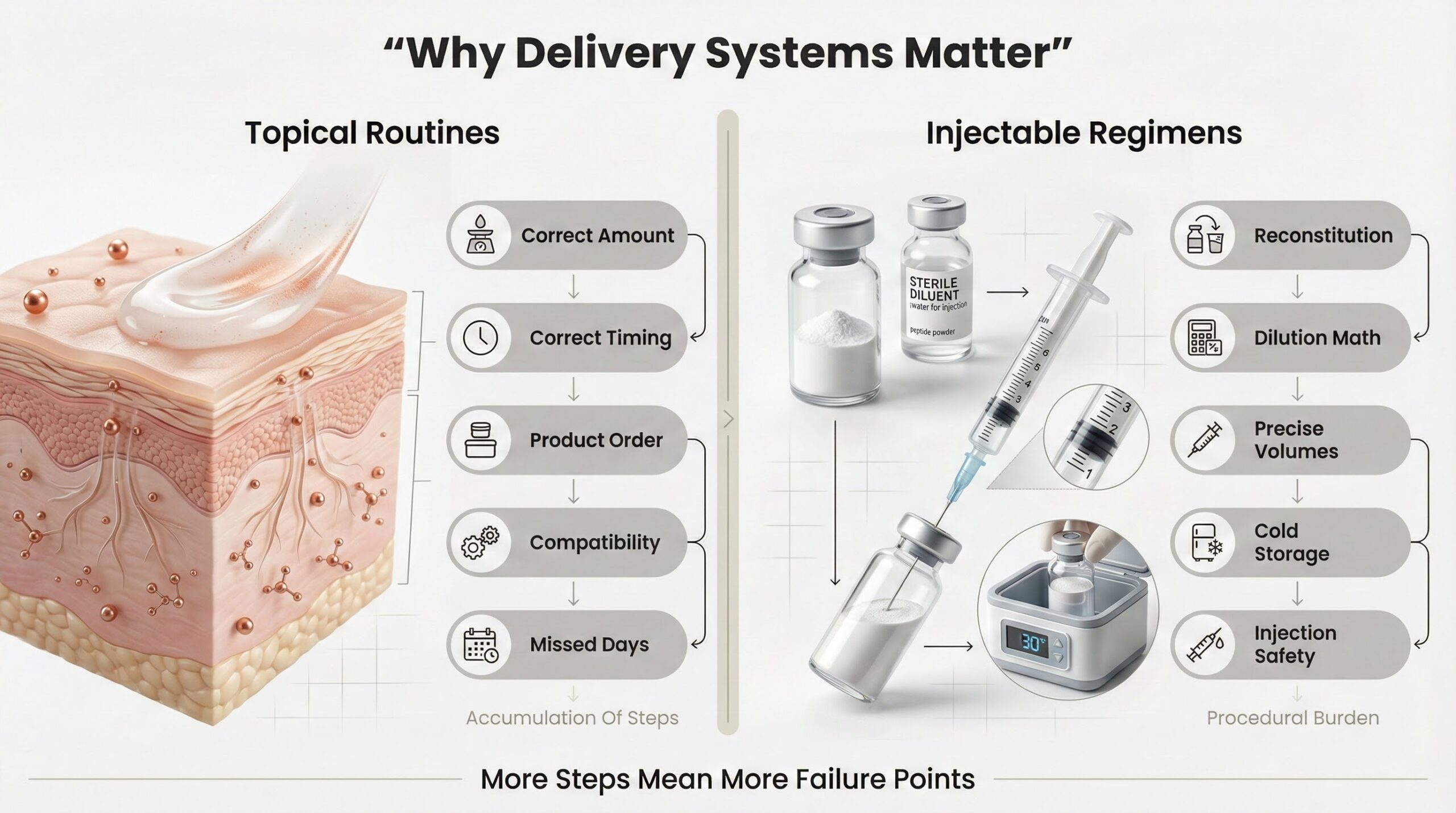
Topical copper peptide products can penetrate the skin barrier and raise local copper levels in the stratum corneum and deeper layers, but real-world results depend on day-by-day execution: correct amount, correct timing, and compatible surrounding products. The more steps a routine demands—measuring creams, managing application order, and avoiding destabilizing combinations—the more chances there are for missed days or suboptimal dosing that interrupt the signaling needed for collagen remodeling.
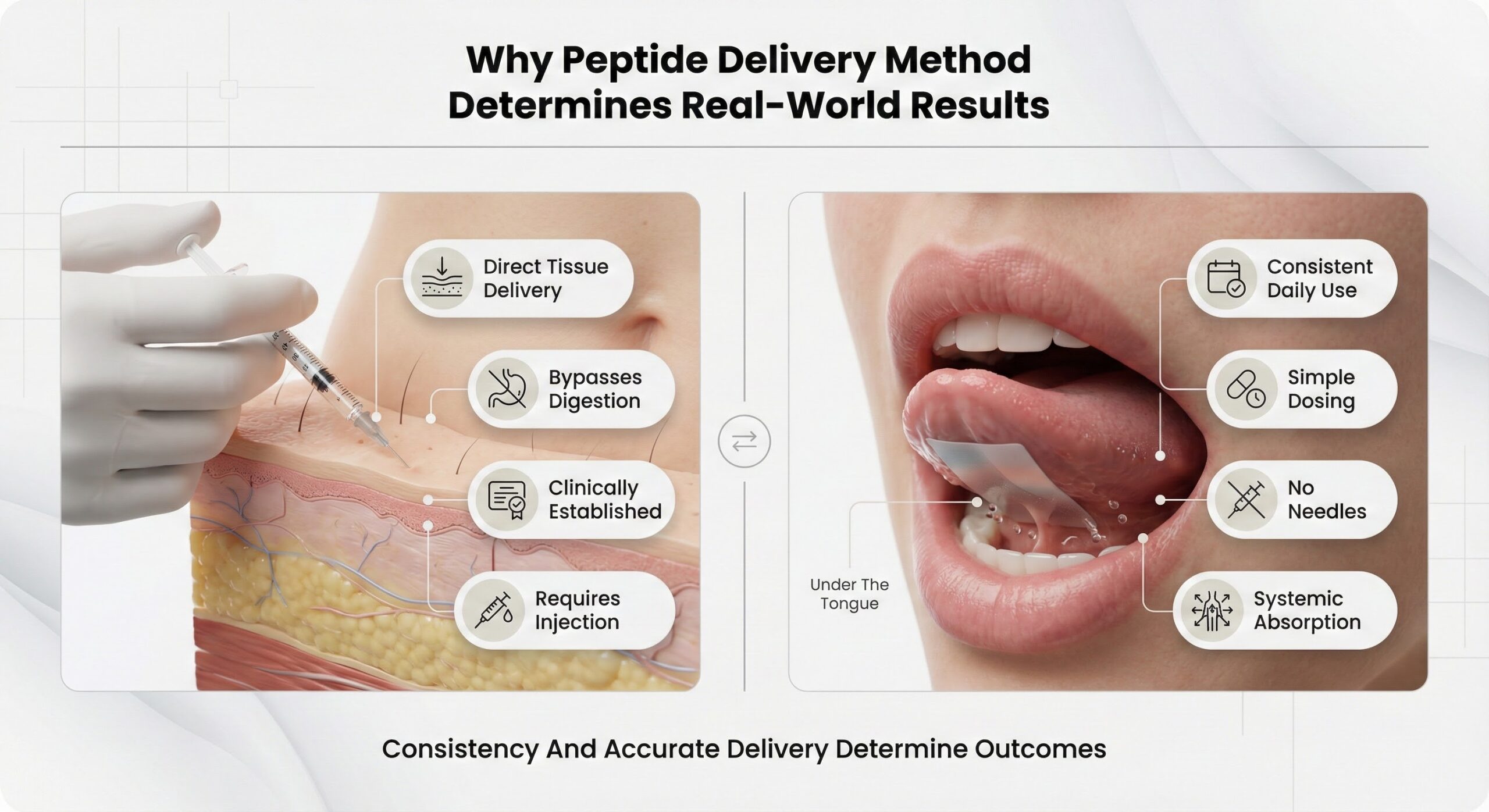
- Injectable regimens add even more system steps: reconstituting peptide powder, calculating dilution, drawing precise volumes, storing correctly, and performing injections safely, all of which must be repeated accurately over long periods.
- Every manual calculation, preparation, or setup requirement becomes a potential failure point that can lead to underdosing, overdosing, or peptide degradation before it reaches target tissues.
How Dissolving Strips Reduce Failure Points
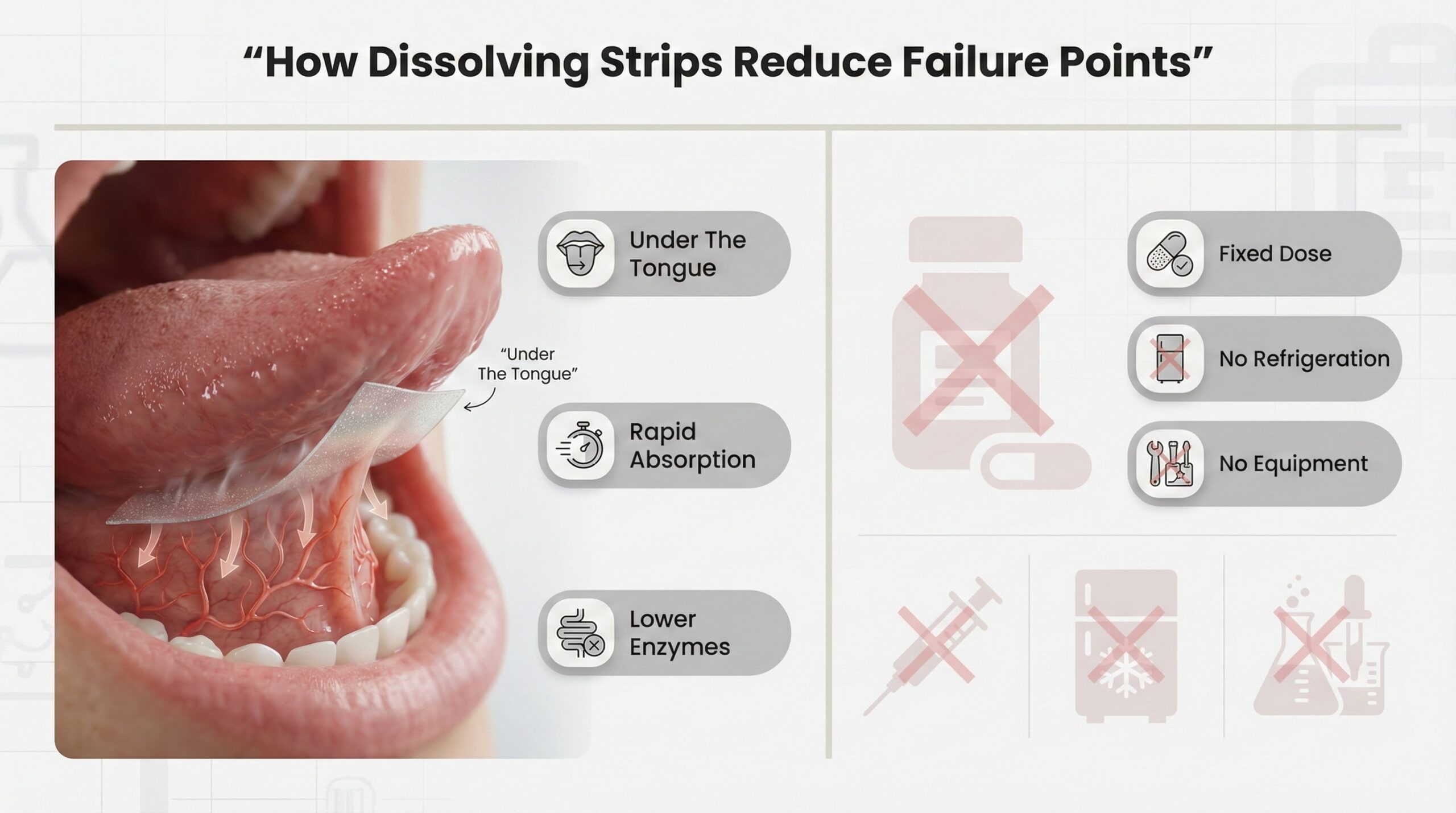
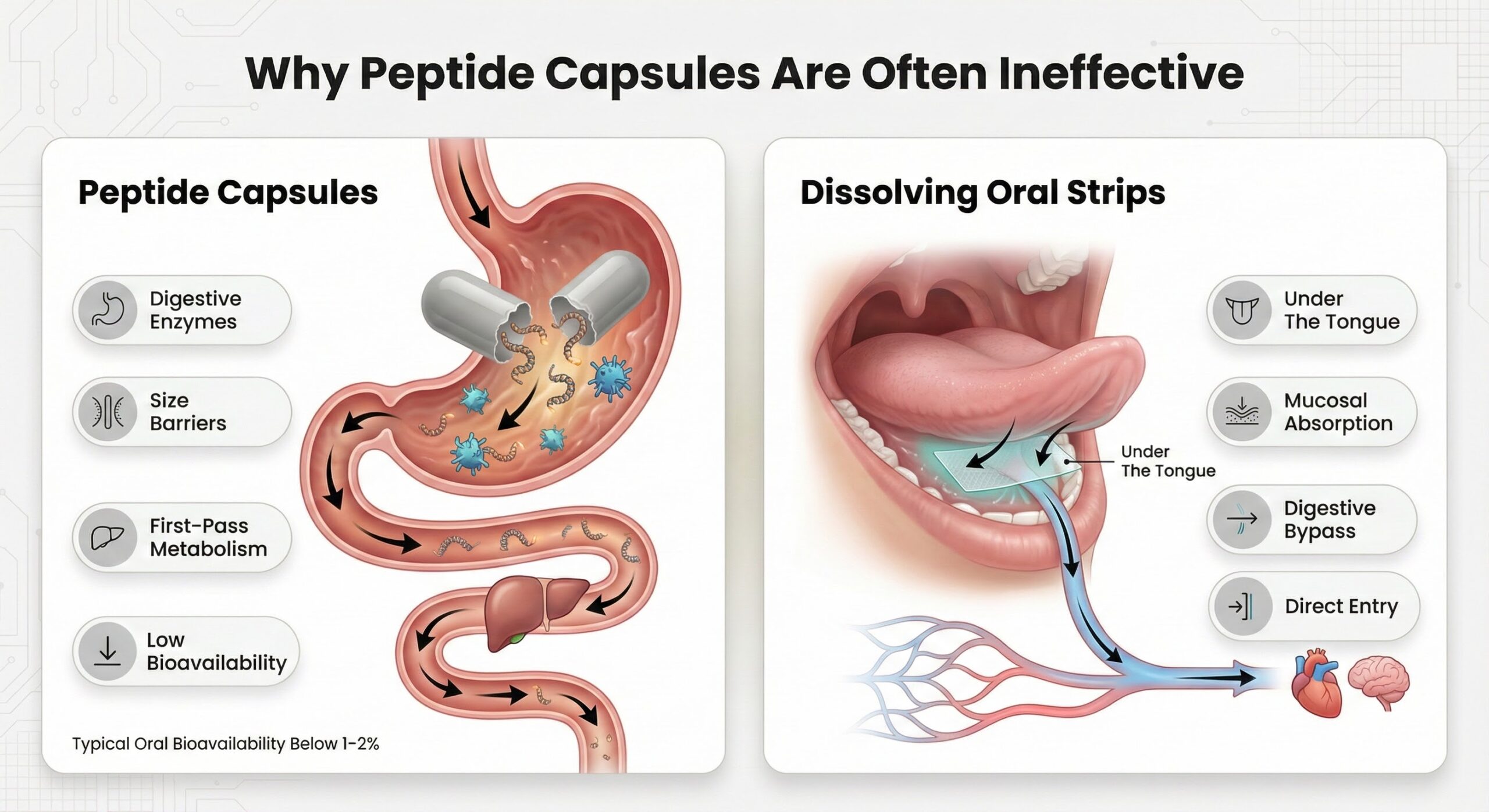
Dissolving oral strips use the sublingual mucosa—tissues that are significantly more permeable than skin—to move peptides directly into local capillaries, supporting rapid entry into circulation without relying on gastrointestinal processing. Because the oral mucosa has lower enzymatic activity than the gut, it provides a more hospitable environment for peptide integrity during absorption.
- Each strip is manufactured with a fixed dose, so users are not responsible for calculations, measurements, or mixing; correct dosing becomes as simple as placing a strip on the tongue or cheek until it dissolves.
- Strips require no refrigeration, no sterile technique, and no equipment, eliminating common friction points that cause people to skip doses or abandon more complex delivery systems.

Why Strips Make Peptide Benefits More Reliable
Copper peptide effects on collagen synthesis, matrix stability, and oxidative protection accumulate through consistent daily signaling, not one-off exposures. When the delivery system minimizes effort and error, people are far more likely to maintain that daily rhythm long enough to see the improvements in firmness, texture, and resilience that research associates with sustained peptide use.
- By standardizing dose and simplifying the routine to a single, fast step, dissolving strips shift the main variable from “Can this person execute a complex protocol?” to “Can this person remember a few seconds a day?”, which is much easier to sustain.
- In practice, that simplicity means copper peptides are not just theoretically effective—they become a dependable part of a low-friction routine that keeps their regenerative signaling active, making strips a practical, everyday way to unlock the full benefits of these compounds.
References
- Dou Y et al. "The potential of GHK as an anti-aging peptide." Aging Pathobiol Ther. 2020. [View Study]
- Pickart L et al. "Regenerative and Protective Actions of the GHK-Cu Peptide in the Light of the New Gene Data." Int J Mol Sci. 2018.[View Study]
Read More
What GMP Certification Means for Supplement Quality
March 10, 2026
Why Peptide Capsules are Often Ineffective
March 10, 2026
Why Peptide Delivery Method Determines Real-World Results
March 10, 2026