




NAD+ and Daily Energy: What to know
NAD+ supports reliable, repeatable energy production by keeping mitochondria supplied with the coenzyme they need to convert nutrients into ATP, and the main determinant of whether you feel that benefit is not the molecule itself, but whether you can take it in the same accurate dose every single day. Delivery method either makes that consistency effortless or turns it into a system full of small failure points that quietly erode your results over time.

How NAD+ Drives Daily Energy
NAD+ acts as a central coenzyme in glycolysis, the tricarboxylic acid cycle, and fatty acid oxidation, where it accepts electrons to form NADH that then feeds the mitochondrial electron transport chain to generate ATP. When NAD+ availability drops, oxidative phosphorylation becomes less efficient, so even normal sleep and nutrition can feel insufficient because cells cannot convert fuel into usable energy reliably.
Beyond immediate ATP production, NAD+ also helps regulate metabolic signaling through its influence on sirtuins and other NAD+-dependent enzymes that support mitochondrial function and stress resilience. These same NAD+-consuming processes in DNA repair and immune regulation draw from the same pool, so chronic strain can deepen the deficit and make fatigue more persistent if levels are not steadily maintained.

Why Supplementation Needs Consistency
NAD+ levels tend to decline with age, which is associated with impaired mitochondrial efficiency and reduced capacity to turn food into energy. NAD+ precursors such as NR and NMN leverage the body’s salvage pathways to rebuild NAD+ and have been shown to raise NAD+ levels measurably when taken regularly.
In one trial using 2000 mg/day of NR, participants with long COVID–related symptoms showed increased NAD+ levels and within-group improvements in fatigue and sleep over several weeks of continuous use, underscoring that outcomes track with sustained intake rather than sporadic dosing. NMN similarly elevates blood NAD+ quickly—plasma levels rise within minutes and return toward baseline around 15 minutes—which reinforces that the body depends on ongoing daily supply rather than a single large dose.

The Real Issue With Complex Delivery Systems
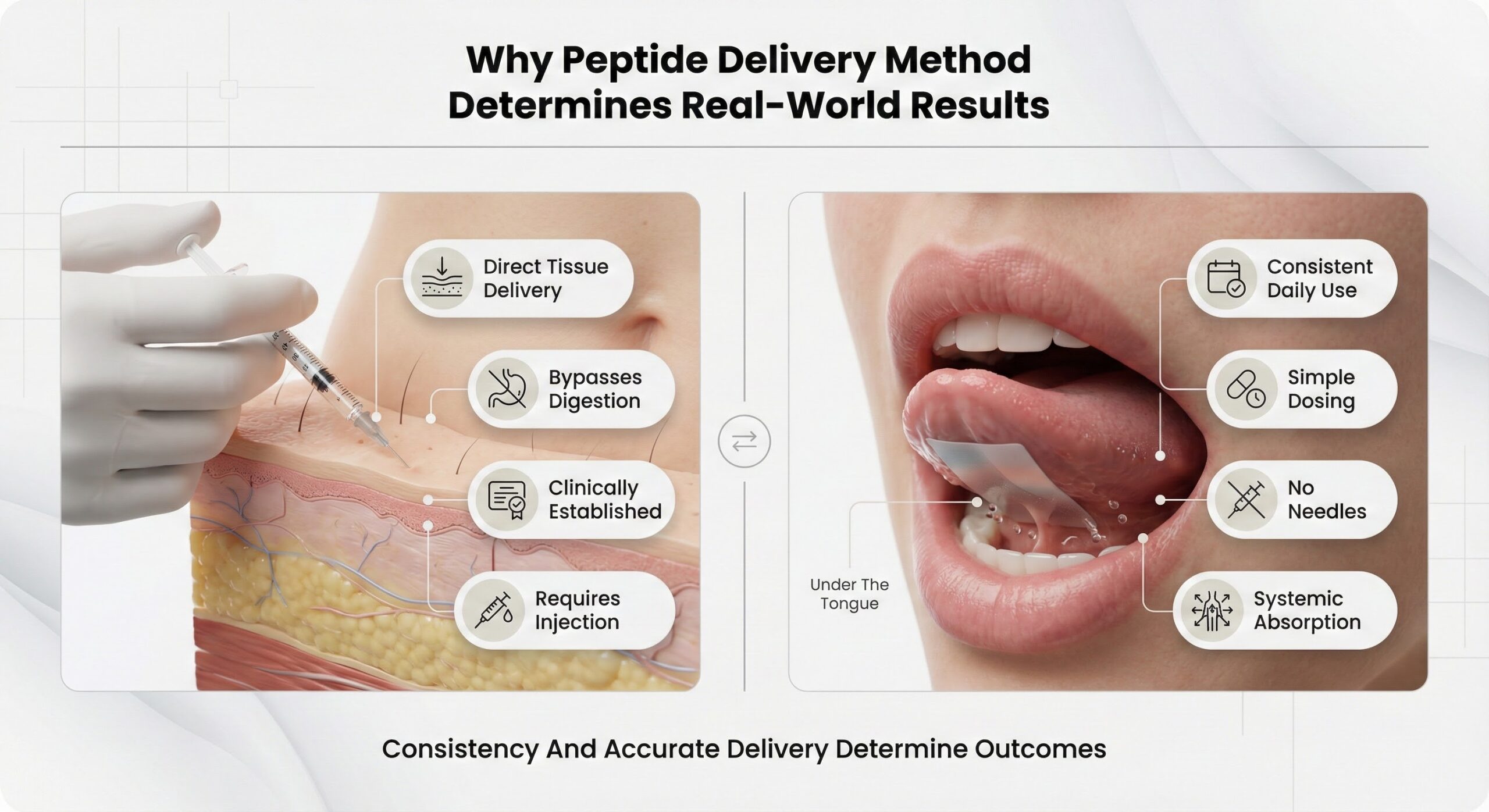
On paper, injectables and intensive protocols can look like the “strongest” option because they bypass digestion and deliver precursors directly into tissue. In practice, they function as multi-step systems that introduce several points where real-world behavior tends to break down over weeks and months rather than days.
Every step—reconstituting powders correctly, drawing precise volumes, maintaining refrigeration, rotating sites, and preserving sterile technique—demands time, tools, and attention, which increases the chance of skipped doses and inconsistent execution as routines get busy. Even minor deviations in measurement or setup accumulate into irregular exposure, so the very protocols designed for maximal delivery often underperform simply because they are hard to sustain with perfect precision in everyday life.

Why Dissolving Strips Support Real-World Precision
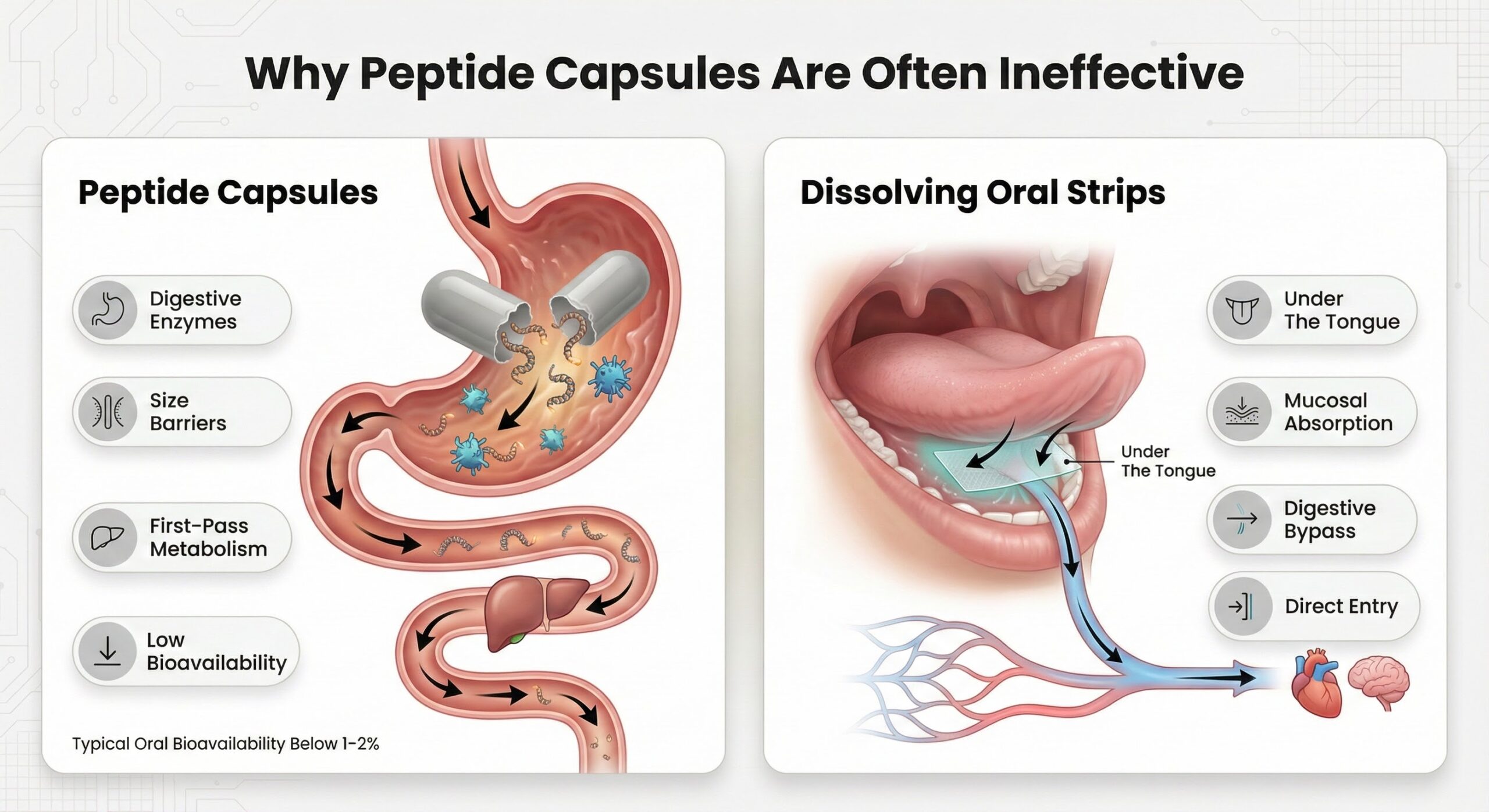
Sublingual delivery routes allow active compounds to enter the bloodstream through the oral mucosa, reducing exposure to first-pass metabolism and supporting more efficient use of each dose compared with standard swallowed capsules. Oro-dispersible and sublingual films have been shown in other contexts to dissolve rapidly and achieve higher early exposure than equivalent tablet forms, which makes them well suited to compounds that need dependable, repeated intake rather than occasional spikes.
Dissolving strips take this a step further by building precision and simplicity into the format itself: each film is manufactured with a fixed, evenly distributed dose, so there is nothing to mix, measure, or calibrate before use. Because the strip liquefies within minutes under the tongue and does not require tools, water, or preparation, it fits cleanly into existing routines—morning teeth brushing, pre-work, or pre-bed—making daily NAD+ precursor use more automatic and less vulnerable to schedule changes.
Consistency as the Bridge From Mechanism to Experience
NAD+ biology explains why precursors can help with daily energy, but experience comes from hitting the same dose again and again until cellular systems adapt. Lifestyle inputs like movement and nutrition support this by activating overlapping pathways, yet they work best when layered onto a supplementation pattern that is steady enough for mitochondria to rely on.
Delivery formats that demand multiple steps, calculations, or equipment tend to lose people over time, which means the underlying science never has the chance to show up in how they feel day to day. Dissolving strips solve that execution gap by turning NAD+ precursor use into a single, repeatable action—place, dissolve, done—so the benefits of these molecules are more likely to translate into consistent, noticeable energy in real life rather than remaining a theoretical promise.
Read More
What GMP Certification Means for Supplement Quality
March 10, 2026
Why Peptide Capsules are Often Ineffective
March 10, 2026
Why Peptide Delivery Method Determines Real-World Results
March 10, 2026