




BPC-157 and Gut Health: What the Research Suggests
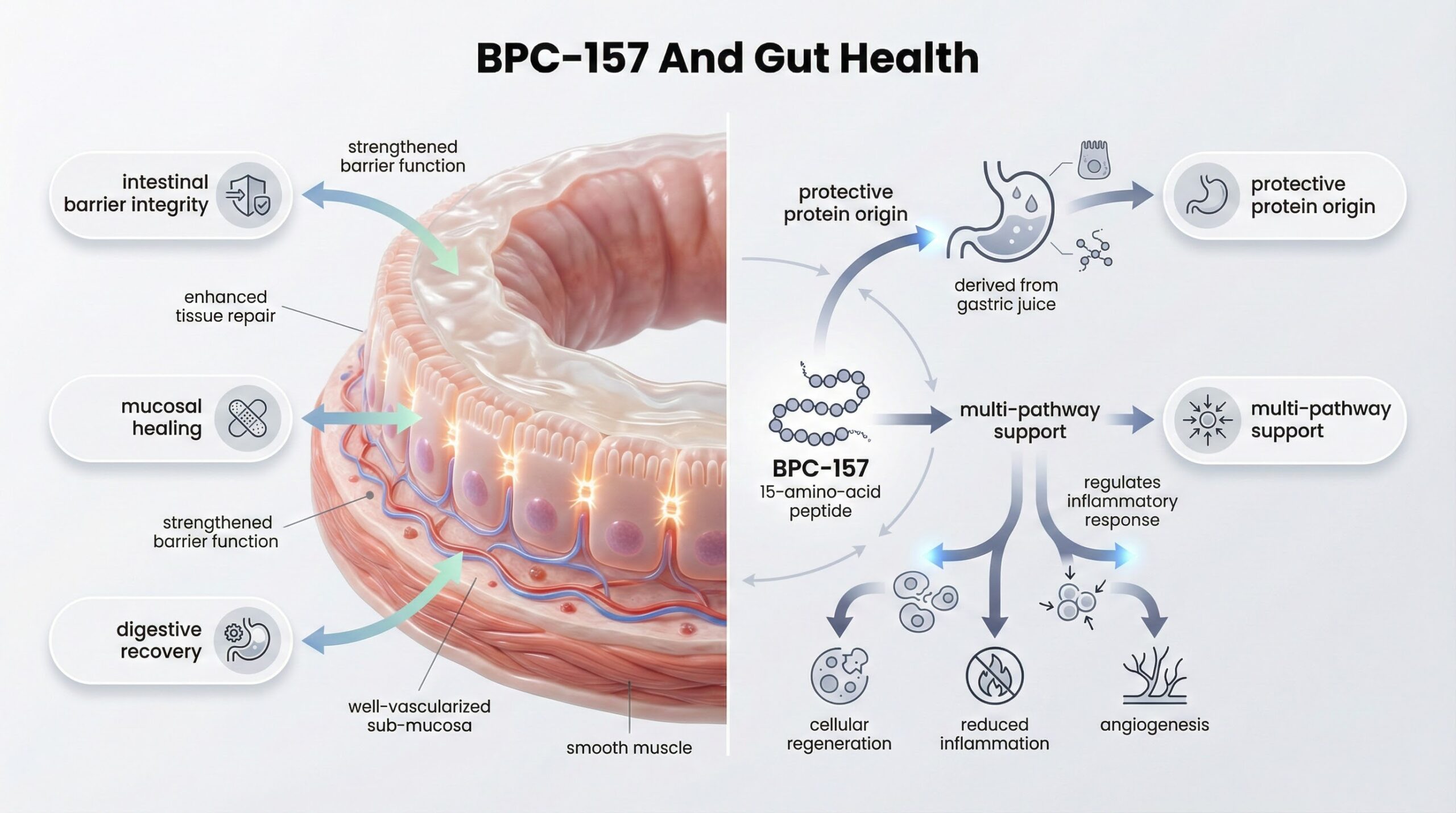
BPC-157 is a 15-amino-acid peptide derived from a protective protein naturally present in human gastric juice. The peptide supports intestinal barrier integrity, mucosal healing, and digestive system recovery through multiple interconnected pathways. These mechanisms make BPC-157 particularly relevant for people dealing with recurring gut issues that haven't responded adequately to conventional treatments.[1]
How BPC-157 Supports Digestive Function
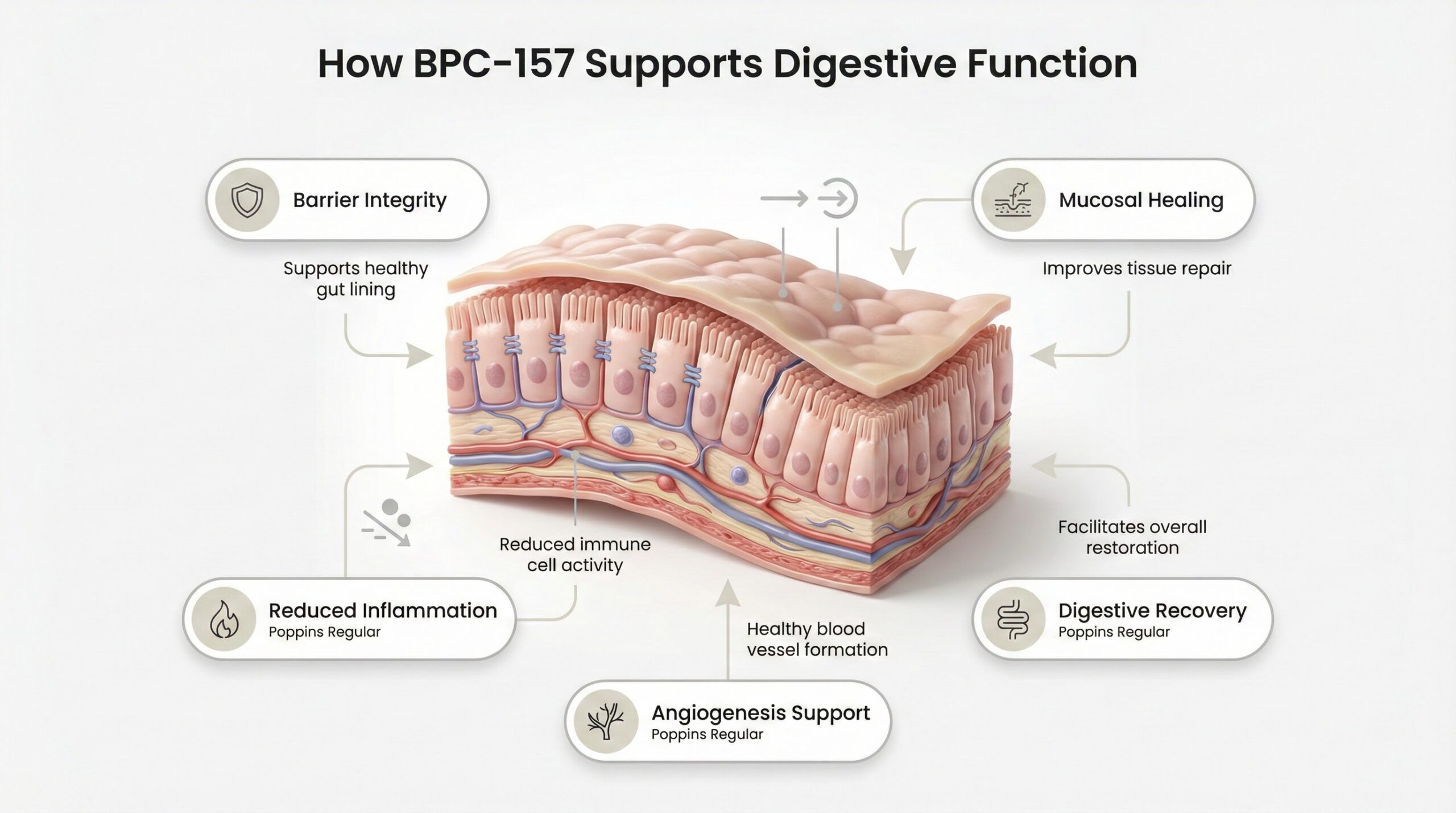
BPC-157 stabilizes cell membranes and functions as a free radical scavenger, directly protecting the tight junction proteins that maintain intestinal barrier integrity. This structural protection addresses scenarios where intestinal permeability becomes compromised, often referred to as "leaky gut". The peptide strengthens the epithelial cell lining and reduces inflammatory cytokines, preventing harmful substances from entering the bloodstream.
The peptide stimulates angiogenesis—the formation of new blood vessels—by upregulating vascular endothelial growth factor (VEGF) expression. This process accelerates tissue healing by improving nutrient and oxygen delivery to damaged mucosal areas. BPC-157 also modulates nitric oxide pathways that influence gut permeability and motility, helping restore normal digestive function.[2]
BPC-157 demonstrates exceptional stability in gastric juice, remaining intact for more than 24 hours under laboratory conditions. This inherent resistance to enzymatic degradation stems from structural features that provide conformational rigidity, supporting its potential for oral delivery.
Documented Effects Across Digestive Conditions
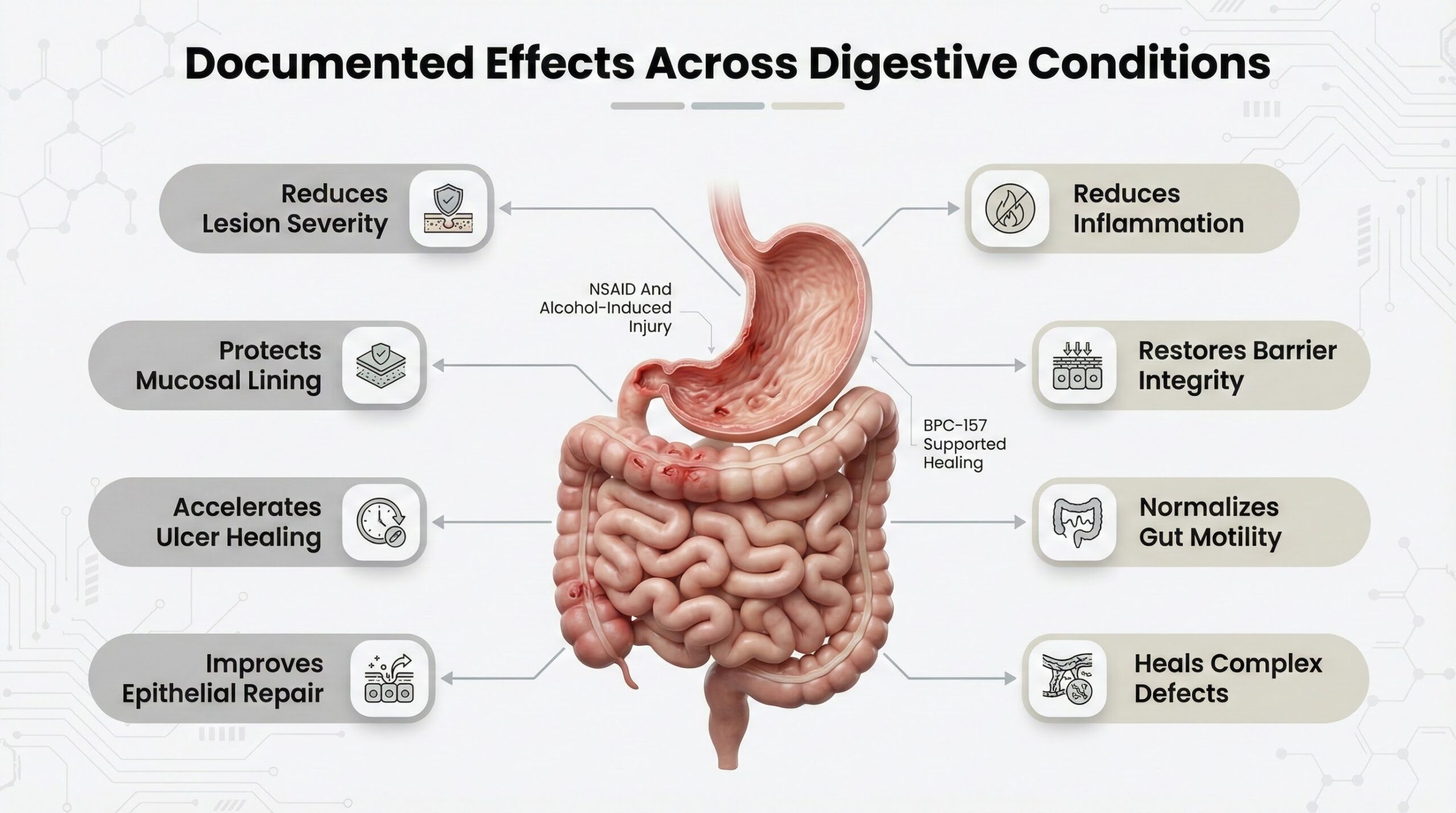
BPC-157 protects against gastric and intestinal lesions induced by non-steroidal anti-inflammatory drugs such as diclofenac and indomethacin, significantly reducing lesion severity. It provides similar protection against alcohol-induced mucosal damage and accelerates healing of ulcers.
In inflammatory bowel conditions, BPC-157 improves epithelial closure, reduces inflammatory cell infiltration, and promotes new smooth muscle formation. Treated subjects showed improved stool formation and passage, reduced tissue damage, and enhanced regeneration of epithelial cells that line the stomach and intestines. The peptide has demonstrated effectiveness in healing complex defects including fistulas, leading to complete closure and cessation of leakage.
BPC-157 may help restore intestinal barrier integrity, normalize abnormal gut motility, and reduce inflammation in the gut lining. These properties make it relevant for irritable bowel syndrome, food sensitivities, and chronic conditions that don't respond adequately to standard treatments.
Why Consistent Dosing Determines Outcomes
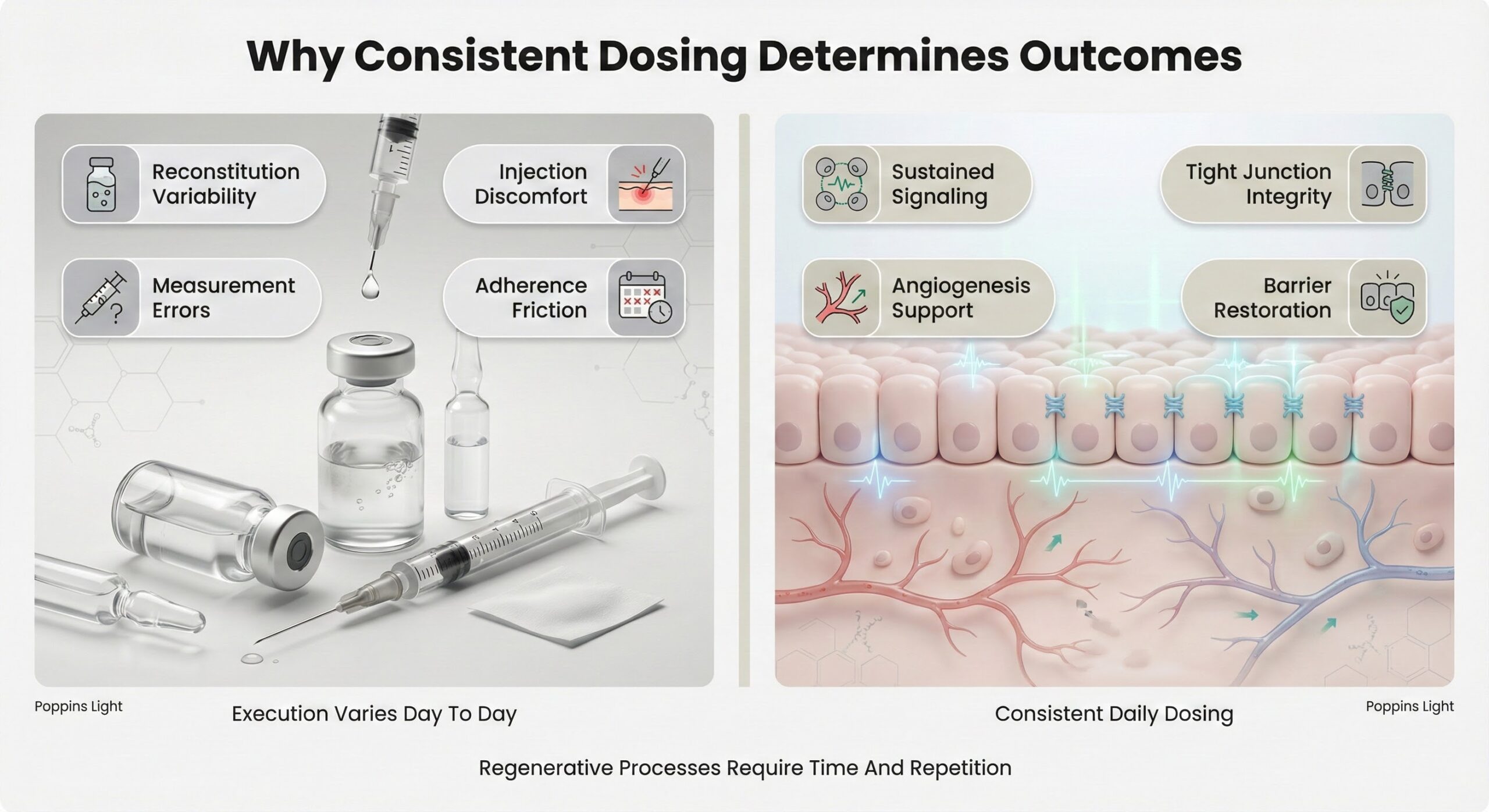
BPC-157's mechanisms—angiogenesis, membrane stabilization, tight junction support, and vascular homeostasis—operate through cellular signaling pathways that require sustained activation. These regenerative processes unfold over time as tissues rebuild, blood vessels form, and barrier function restores. That timeline requires correct and consistent dosing every day.
Injectable formulations introduce multiple points where execution can vary. Reconstitution requires mixing peptide powder with bacteriostatic water in exact ratios. Drawing the correct volume from a vial requires visual precision that varies with lighting, hand steadiness, and user experience. Injection-site reactions, discomfort, and the cumulative logistical burden—training, preparation, administration technique—create friction that erodes adherence over time.[3]
Research on self-injectable treatments shows that while fear of injection isn't the primary barrier, the perceived burden of treatment significantly influences whether patients persist with therapy. These compliance issues matter because BPC-157 requires repeated dosing to maintain the sustained receptor engagement needed for tissue repair.
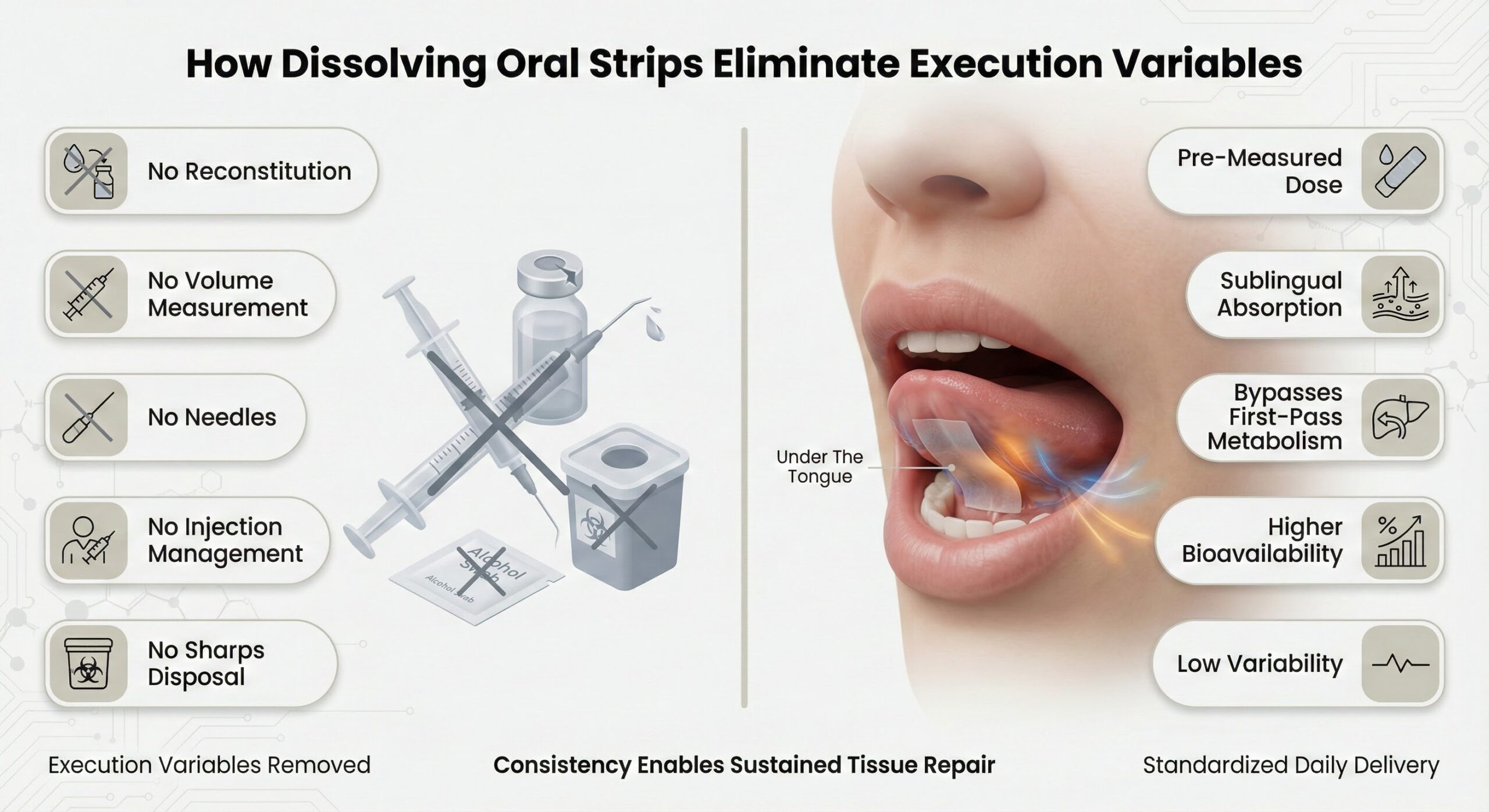
How Dissolving Oral Strips Eliminate Execution Variables
Oral dissolving strips contain a pre-measured peptide dose in a stable film that dissolves under the tongue within seconds. There is no reconstitution, no volume measurement, no needle preparation, and no injection-site management.[4]
The sublingual route allows peptides to enter the bloodstream directly through the highly vascularized sublingual region, bypassing first-pass hepatic metabolism. Sublingual administration achieves significantly higher bioavailability compared to conventional oral dosing, with reduced intersubject variability due to precise dosing in each strip. The microenvironment created between the dissolving strip and mucosal membrane optimizes absorption conditions.
Strips standardize the experience. Every administration delivers the same dose with the same absorption profile, eliminating the variability introduced by reconstitution errors, measurement imprecision, or inconsistent injection depth. The format is portable, requires no refrigeration for short-term storage, and creates no sharps disposal concerns.[4]
From a behavioral standpoint, strips remove friction. There is no setup sequence, no training requirement, and no discomfort to overcome. This reduction in treatment burden directly addresses the compliance challenges documented with self-injectable therapies. When adherence improves, peptide exposure becomes more consistent, and consistent exposure is what allows tissue repair pathways to function optimally over weeks and months. [3]
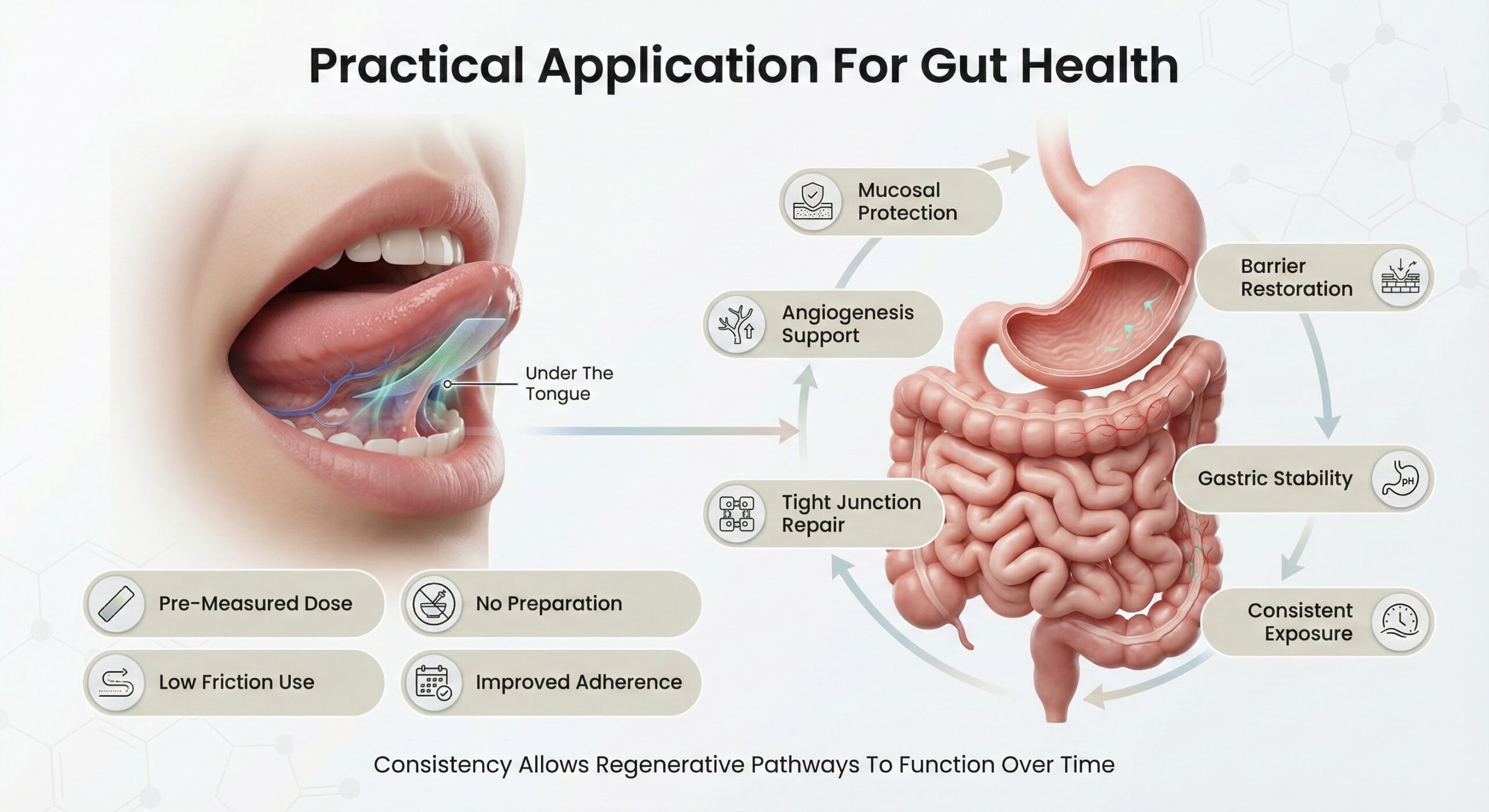
Practical Application for Gut Health
For gut health applications—whether addressing NSAID-related damage, inflammatory bowel symptoms, barrier dysfunction, or recurring digestive issues—BPC-157's documented benefits only translate into real outcomes with correct and consistent administration. The peptide's stability in gastric juice and its mechanisms of mucosal protection, angiogenesis, and tight junction restoration require sustained exposure to achieve tissue repair.
Dissolving oral strips make that consistency achievable. The format eliminates the preparation burden, measurement variability, and psychological resistance that cause people to miss doses or discontinue treatment prematurely. You're not managing a complex protocol; you're placing a strip under your tongue. The simplicity matters because it removes the gap between intention and execution, allowing BPC-157's regenerative pathways to function as intended over the treatment timeline.
References
- Sikiric P et al. "Stable Gastric Pentadecapeptide BPC 157 May Recover Brain-Gut Axis and Gut-Brain Axis Function." Pharmaceuticals (Basel). 2023. [View Study]
- Sikiric P et al. "Stable Gastric Pentadecapeptide BPC 157, Robert's Stomach Cytoprotection/Adaptive Cytoprotection/Organoprotection, and Selye's Stress Coping Response: Progress, Achievements, and the Future." Gut Liver. 2020. [View Study]
- Brod M et al. "Understanding compliance issues for daily self-injectable treatment in ambulatory care settings." Patient Prefer Adherence. 2008. [View Study]
- Bala R et al. "Orally dissolving strips: A new approach to oral drug delivery system." Int J Pharm Investig. 2013. [View Study]
- Sabra R et al. "Buccal Absorption of Biopharmaceutics Classification System III Drugs: Formulation Approaches and Mechanistic Insights." Pharmaceutics. 2024. [View Study]
- Baryakova TH et al. "Overcoming barriers to patient adherence: the case for developing innovative drug delivery systems." Nat Rev Drug Discov. 2023. [View Study]
Read More

Preventing Overuse Injuries: The Role of Recovery
March 11, 2026
What GMP Certification Means for Supplement Quality
March 10, 2026
Why Peptide Capsules are Often Ineffective
March 10, 2026