




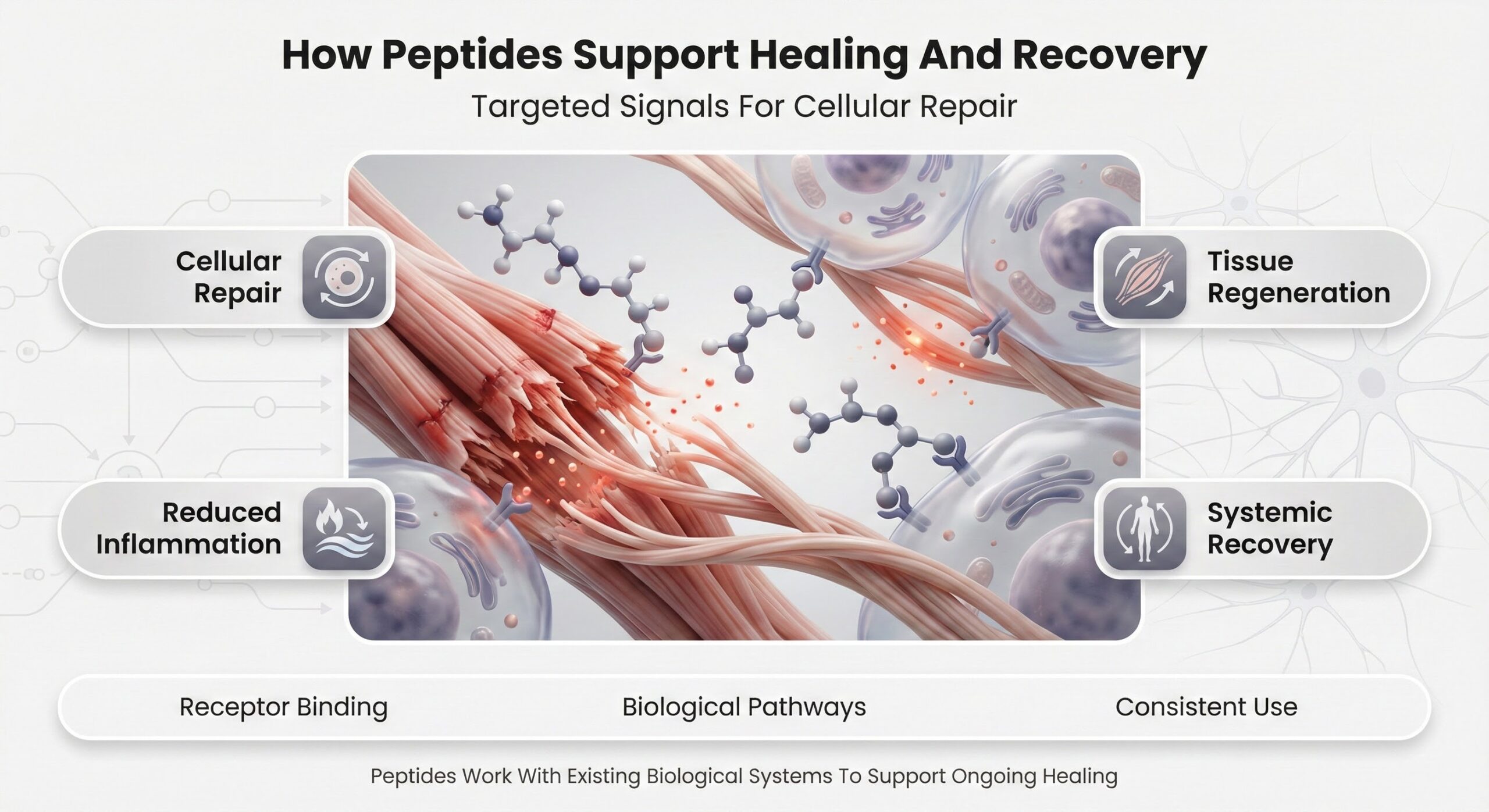
How Peptides Support Healing and Recovery
Peptides bind to specific receptors throughout your body to trigger cellular repair, tissue regeneration, and recovery. These signaling molecules work continuously to maintain homeostasis—the same way insulin regulates blood sugar or other peptide hormones coordinate healing processes. When used therapeutically, peptides bolster existing biological pathways to support tissue repair, reduce inflammation, and accelerate recovery from training or injury.
The benefits accumulate through sustained, consistent use. Whether supporting gut barrier integrity, muscle recovery, or connective tissue repair, peptides deliver measurable outcomes when they reach systemic circulation intact and bind to their target receptors reliably over weeks and months.
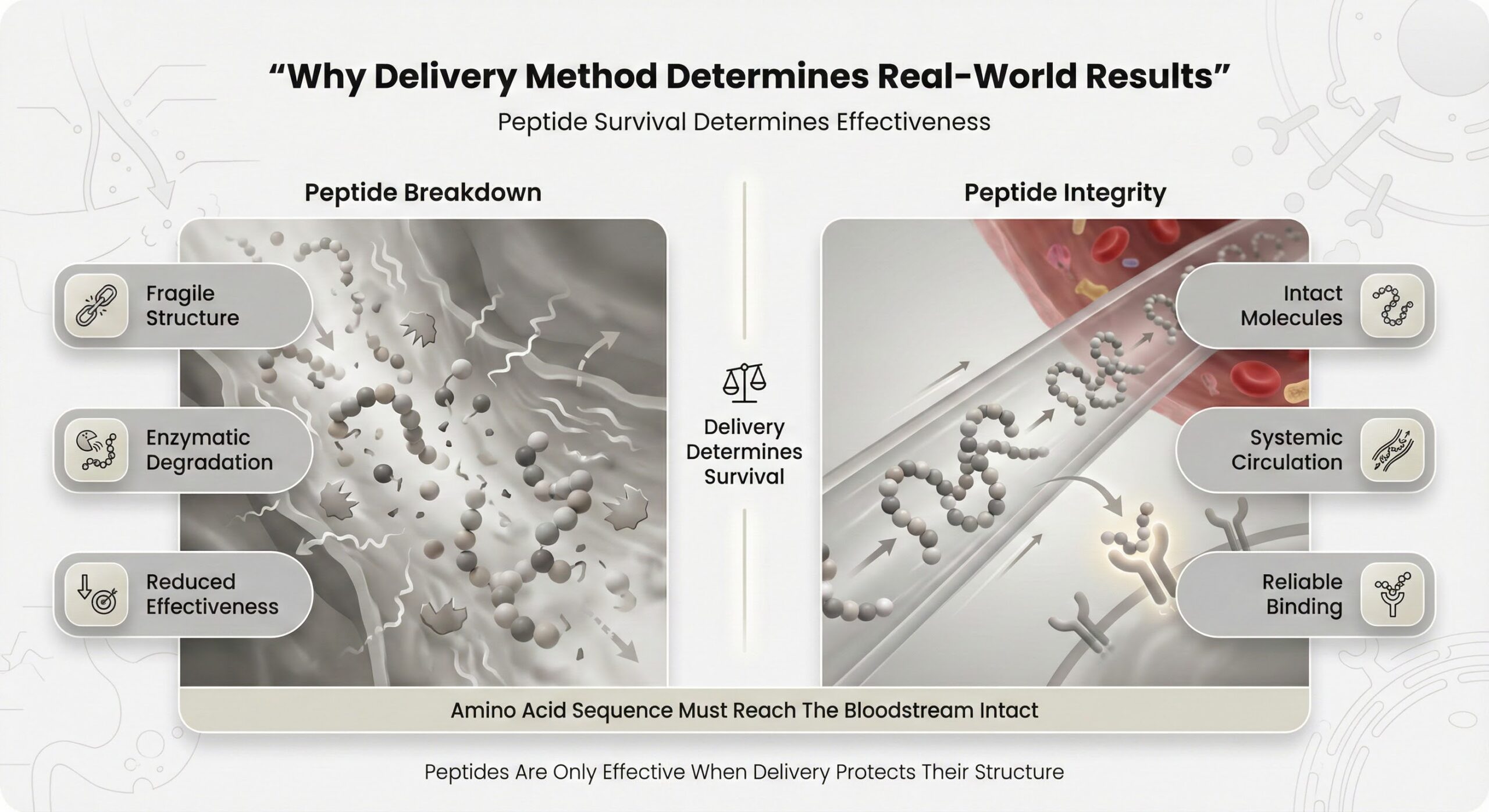
Why Delivery Method Determines Real-World Results
Peptide effectiveness depends entirely on whether the molecule reaches your bloodstream intact. The structure that makes peptides effective—their precise amino acid sequence—also makes them fragile. How you deliver a peptide determines whether it survives to do its job.
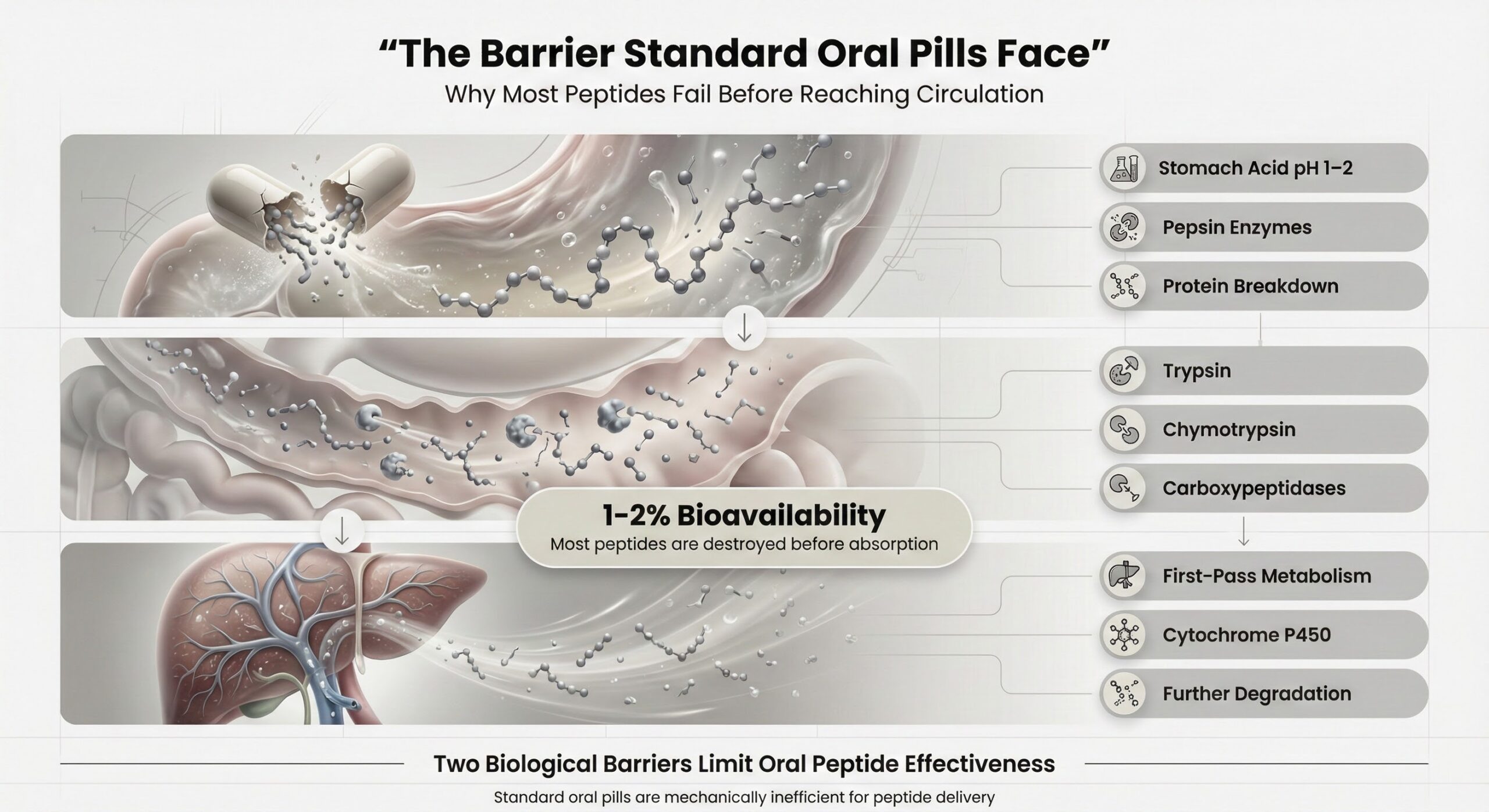
The Barrier Standard Oral Pills Face
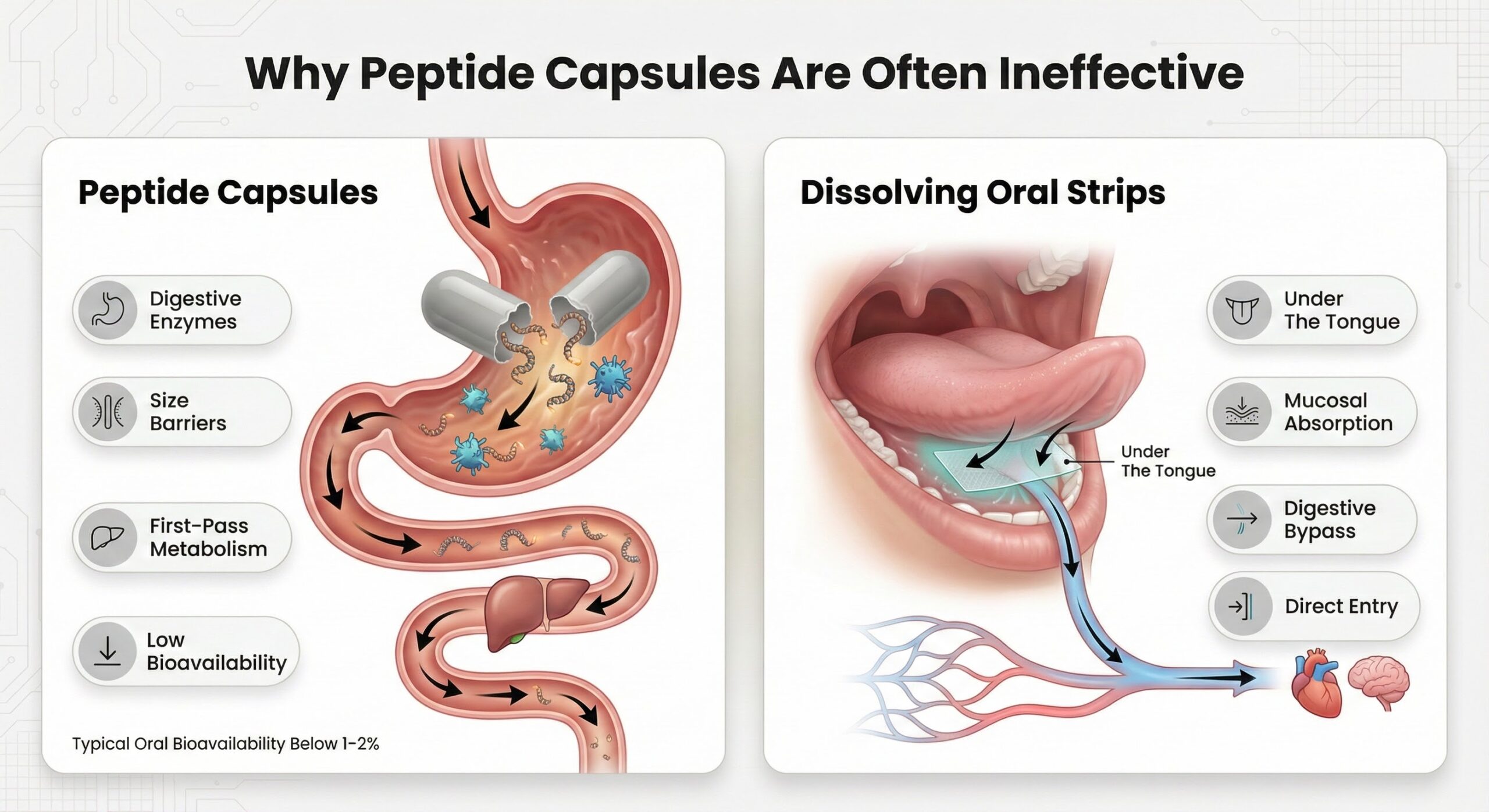
Traditional oral capsules or tablets must survive an environment specifically designed to break down proteins. Stomach acid maintains pH levels between 1.0 and 2.0, while pepsin enzymes cleave peptide bonds. Even peptides that survive the stomach encounter trypsin, chymotrypsin, and carboxypeptidases in the small intestine—enzymes that rapidly degrade most peptide structures. The result is predictable: oral peptide bioavailability typically ranges from 1–2%, meaning 98–99% of what you swallow is destroyed before reaching circulation.
Substances that do cross the intestinal barrier still face first-pass metabolism—direct routing through the liver where cytochrome P450 enzymes degrade compounds further before they reach systemic circulation. This double barrier makes standard oral pills mechanically inefficient for peptide delivery.[1]
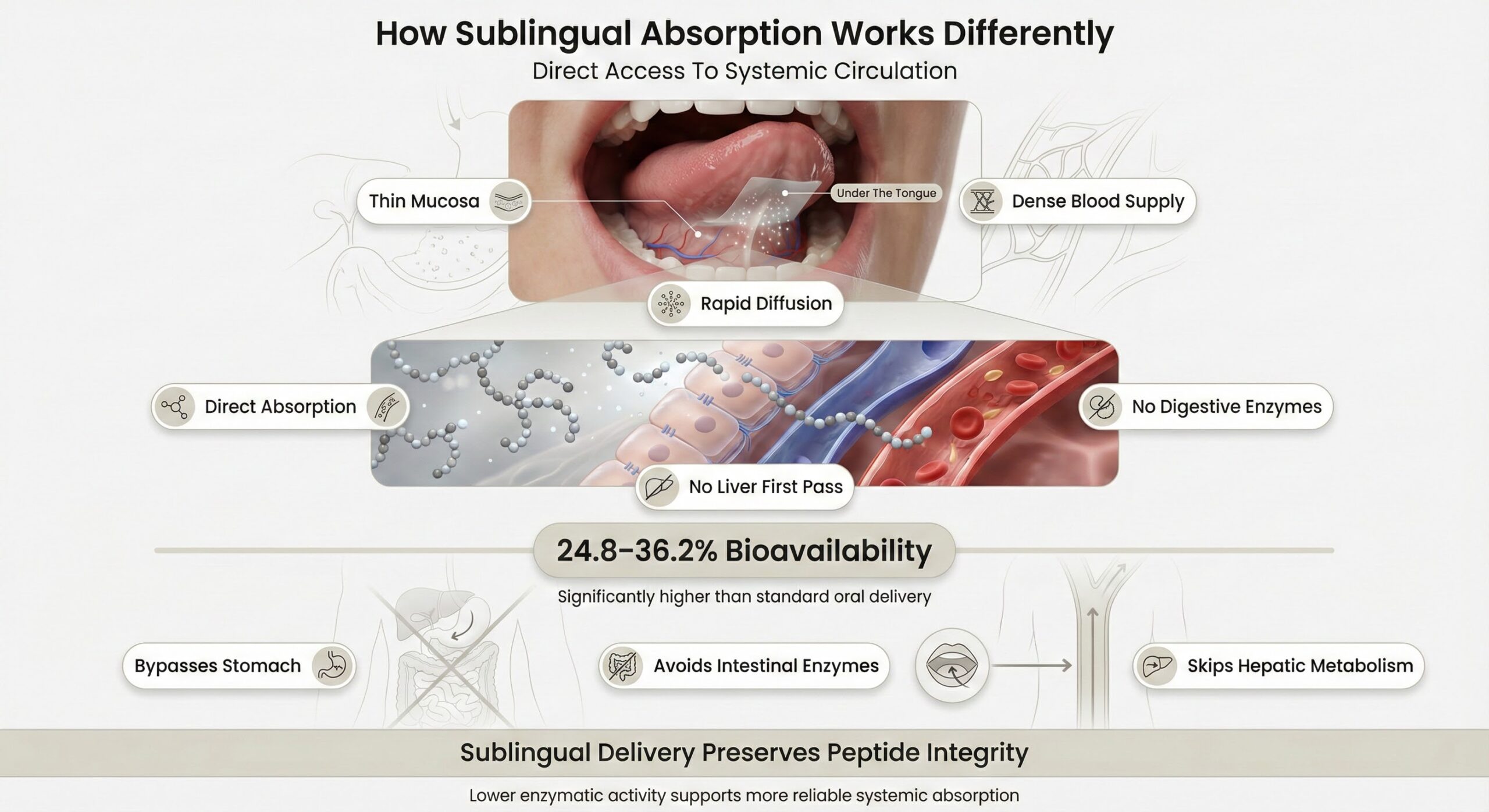
How Sublingual Absorption Works Differently
The tissue beneath your tongue operates on different anatomical principles. The sublingual mucosa measures only 100–200 micrometers thick and is densely supplied with blood vessels running parallel to the surface. When a peptide dissolves under the tongue, it diffuses directly through this permeable membrane and enters venous circulation immediately—bypassing the stomach, intestinal enzymes, and hepatic portal system entirely.
This route avoids first-pass metabolism completely. The peptide reaches systemic circulation without encountering the digestive cascade that destroys swallowed compounds. While the oral mucosa contains some enzymatic activity, it's significantly lower than gastrointestinal levels. Sublingual delivery achieves bioavailability rates ranging from 24.8% to 36.2% depending on formulation—substantially higher than standard oral administration. [1]
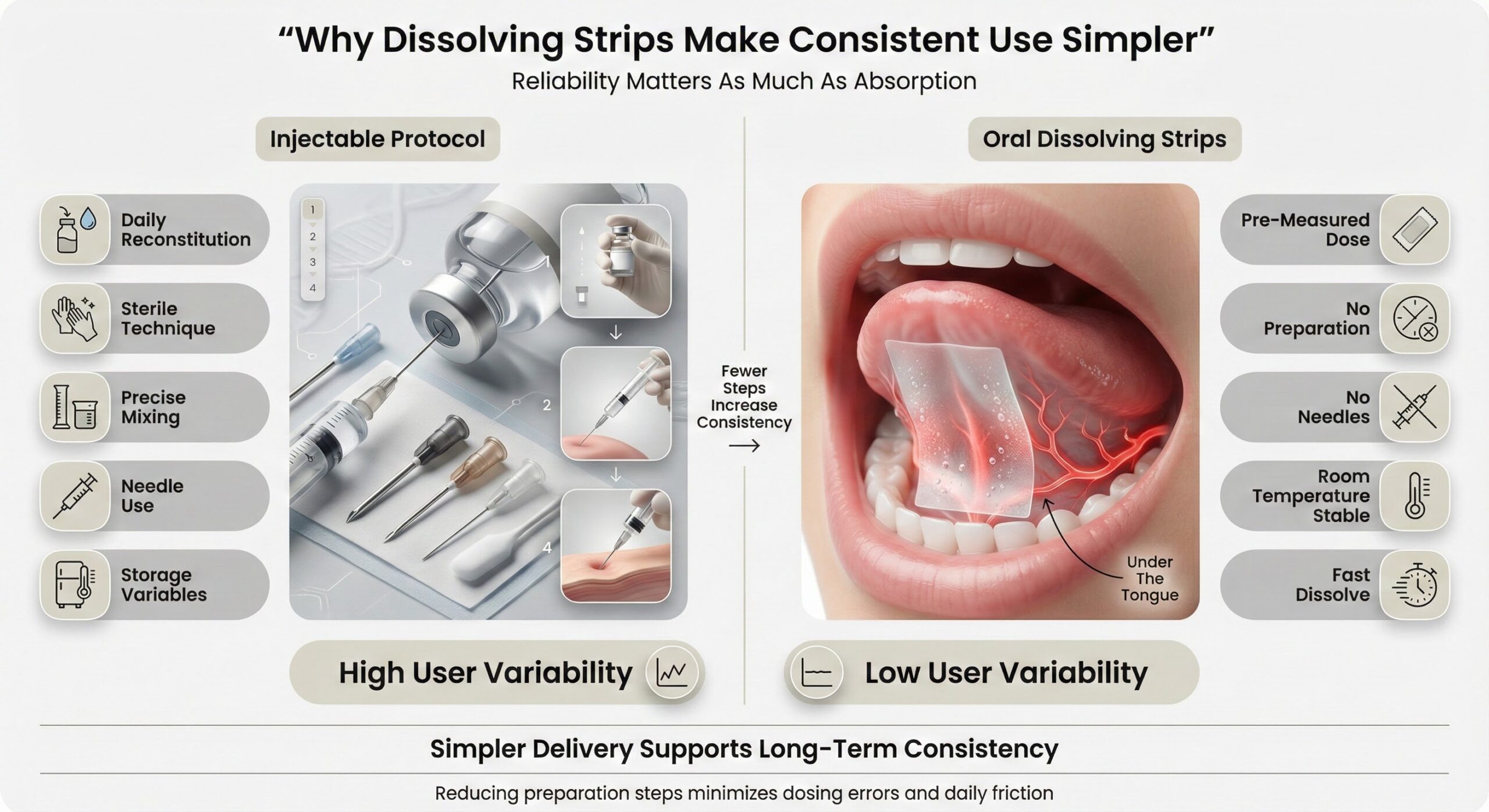
Why Dissolving Strips Make Consistent Use Simpler
Understanding that sublingual delivery protects peptides is one thing. Executing a protocol correctly every day for months is another. The difference between delivery methods isn't just absorption—it's reliability of daily execution.
Injectable Systems Require Multi-Step Precision
Injectable peptides demand daily reconstitution: measuring bacteriostatic water, injecting it slowly along the vial wall to avoid foaming and molecular disruption, maintaining sterile technique throughout, and drawing the precise dose. Each step introduces variables—temperature control, solvent proportions, sterile handling, and injection site management. Minor errors like injecting solvent too quickly, using non-sterile instruments, or improper storage can compromise peptide activity.
Beyond reconstitution, there's the injection itself: site rotation, needle disposal, potential injection-site reactions, and the psychological friction of daily needles. Each component adds complexity, and complexity creates opportunities for inconsistency.
Oral Dissolving Strips Eliminate Preparation Steps
Oral dissolving strips contain pre-measured peptide doses in stable, mucoadhesive films that dissolve beneath the tongue within seconds. There's no mixing, no measuring, no needles, and no refrigeration requirements. You place the strip under your tongue, let it dissolve, and absorption begins within minutes.[1]
This design removes user error from dosing. Each strip delivers precise amounts of peptide independent of preparation variables. Mucoadhesive polymers like chitosan or hyaluronic acid extend contact time with the sublingual mucosa, maximizing absorption before salivary flow begins. Chemical modifications like PEGylation or protective coatings shield peptides from residual enzymatic activity in the mouth. The result is consistent peak concentrations with less variability than multi-step protocols.
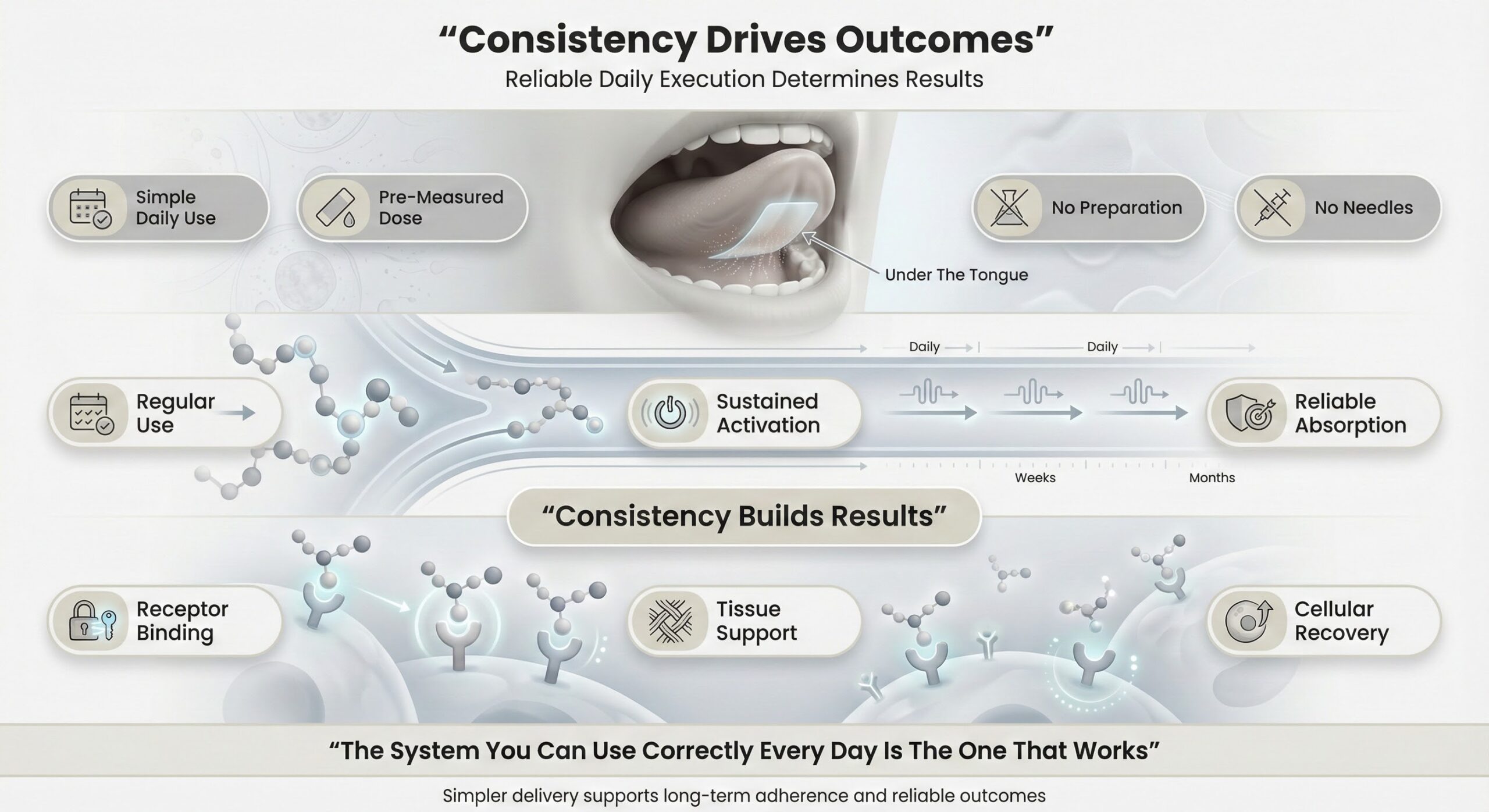
Consistency Drives Outcomes
What matters isn't achieving a single perfect dose—it's whether you can execute the protocol correctly every day for weeks or months. Peptide benefits accumulate through regular, sustained receptor activation. Whether you're supporting tissue repair, recovery, or cellular health, the system that's easier to use correctly is the system that delivers reliable outcomes.
Strips fit into daily routines without specialized training, setup burden, or injection anxiety. You can use them at home, at work, or while traveling. There's no multi-step process that invites mistakes, no sharps disposal, and no preparation complexity. The adherence advantage is structural. When the system is simpler, you use it correctly and consistently. When you use it correctly and consistently, peptides reach your bloodstream intact, bind to receptors, and deliver the cellular repair and recovery outcomes you started therapy to achieve.
References
- Bala R et al. "Orally dissolving strips: A new approach to oral drug delivery system." Int J Pharm Investig. 2013. [View Study]
- Baral KC et al. "Barriers and Strategies for Oral Peptide and Protein Therapeutics Delivery: Update on Clinical Advances." Pharmaceutics. 2025. [View Study]
- Sikiric P et al. "Stable Gastric Pentadecapeptide BPC 157 May Recover Brain-Gut Axis and Gut-Brain Axis Function." Pharmaceuticals (Basel). 2023. [View Study]
Read More

Preventing Overuse Injuries: The Role of Recovery
March 11, 2026
What GMP Certification Means for Supplement Quality
March 10, 2026
Why Peptide Capsules are Often Ineffective
March 10, 2026