




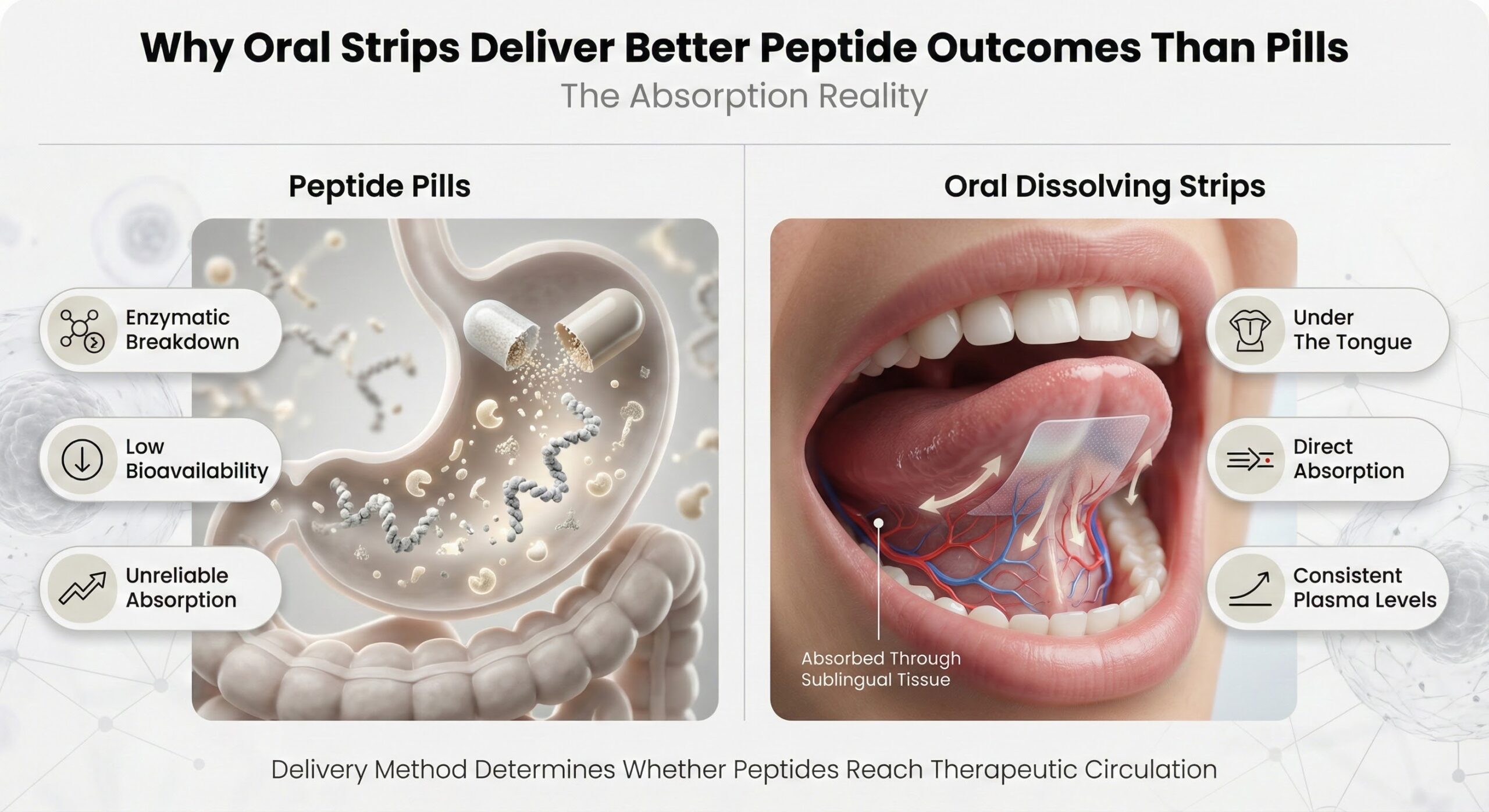
Why Oral Strips Deliver Better Peptide Outcomes Than Pills: The Absorption Reality
Peptides support cellular repair, metabolic function, and tissue regeneration through reliable, repeated signaling. These benefits depend entirely on whether therapeutic amounts reach your bloodstream consistently enough to trigger the biological responses your cells recognize. The delivery method determines whether you experience these outcomes or simply take something that never achieves meaningful plasma concentrations.
Pills present a fundamental obstacle for peptide delivery: digestive enzymes destroy the molecular structure before absorption occurs. Oral dissolving strips eliminate this problem by delivering peptides directly through the tissue under your tongue, where they absorb into circulation without encountering the enzymatic degradation that makes pills ineffective for these compounds.[1]
How Digestive Enzymes Break Down Peptides
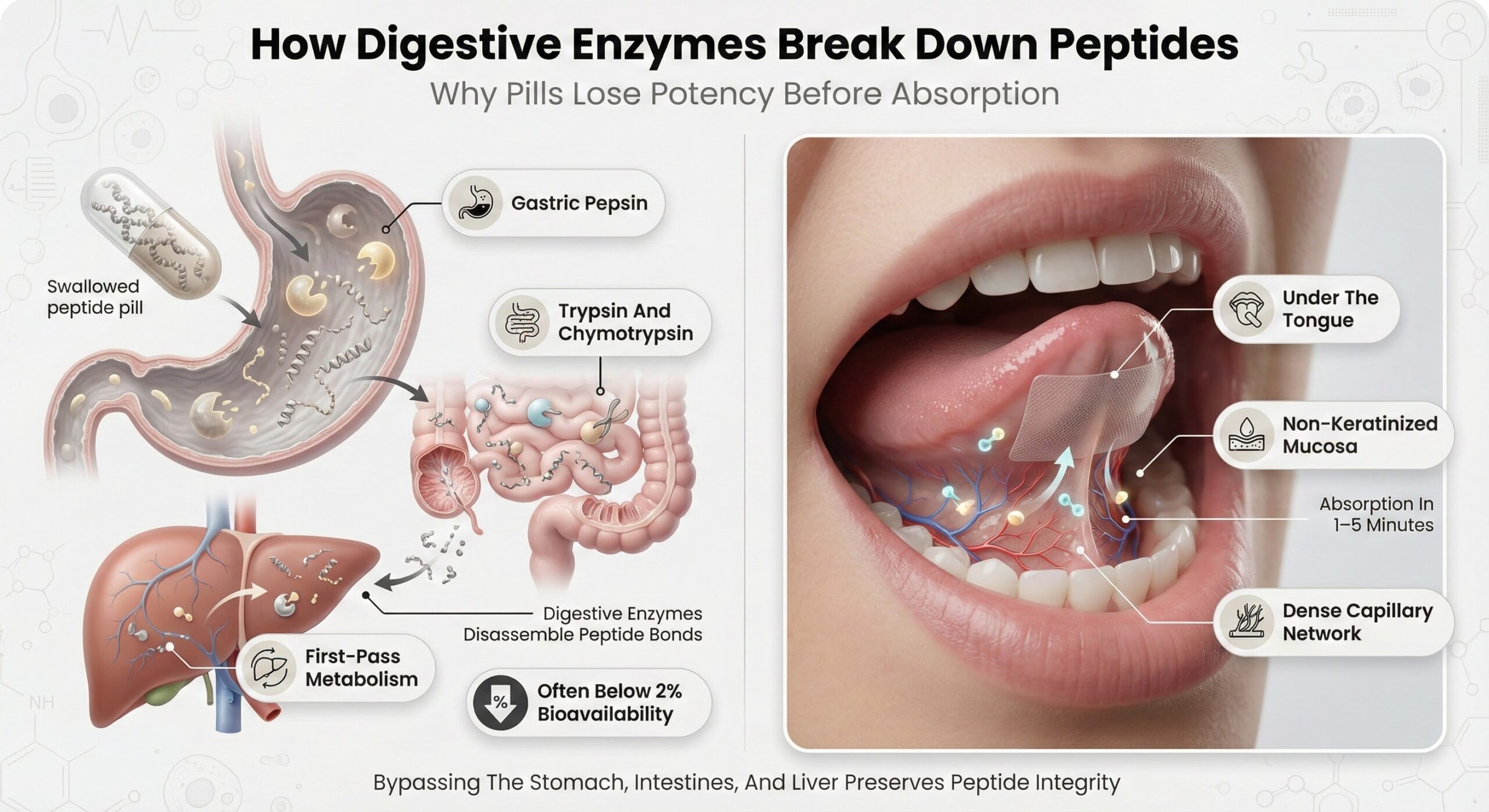
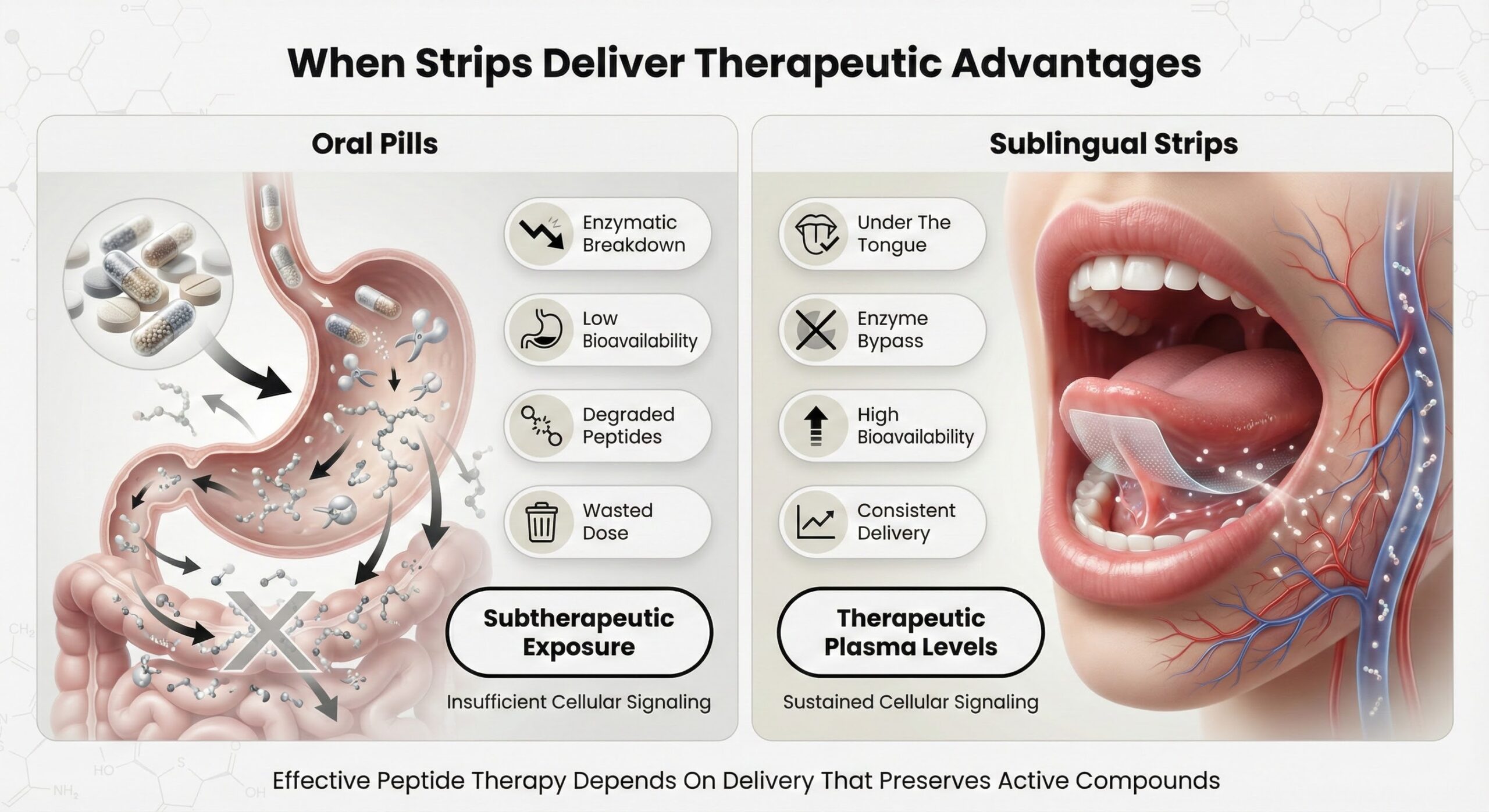
The oral mucosa absorbs substances 4 to 4,000 times more efficiently than skin. When you place a dissolving strip under your tongue, peptides cross directly through this thin, highly vascularized tissue into the bloodstream within minutes. This sublingual route bypasses your stomach, intestines, and liver entirely—the three locations where peptide bonds face enzymatic breakdown.
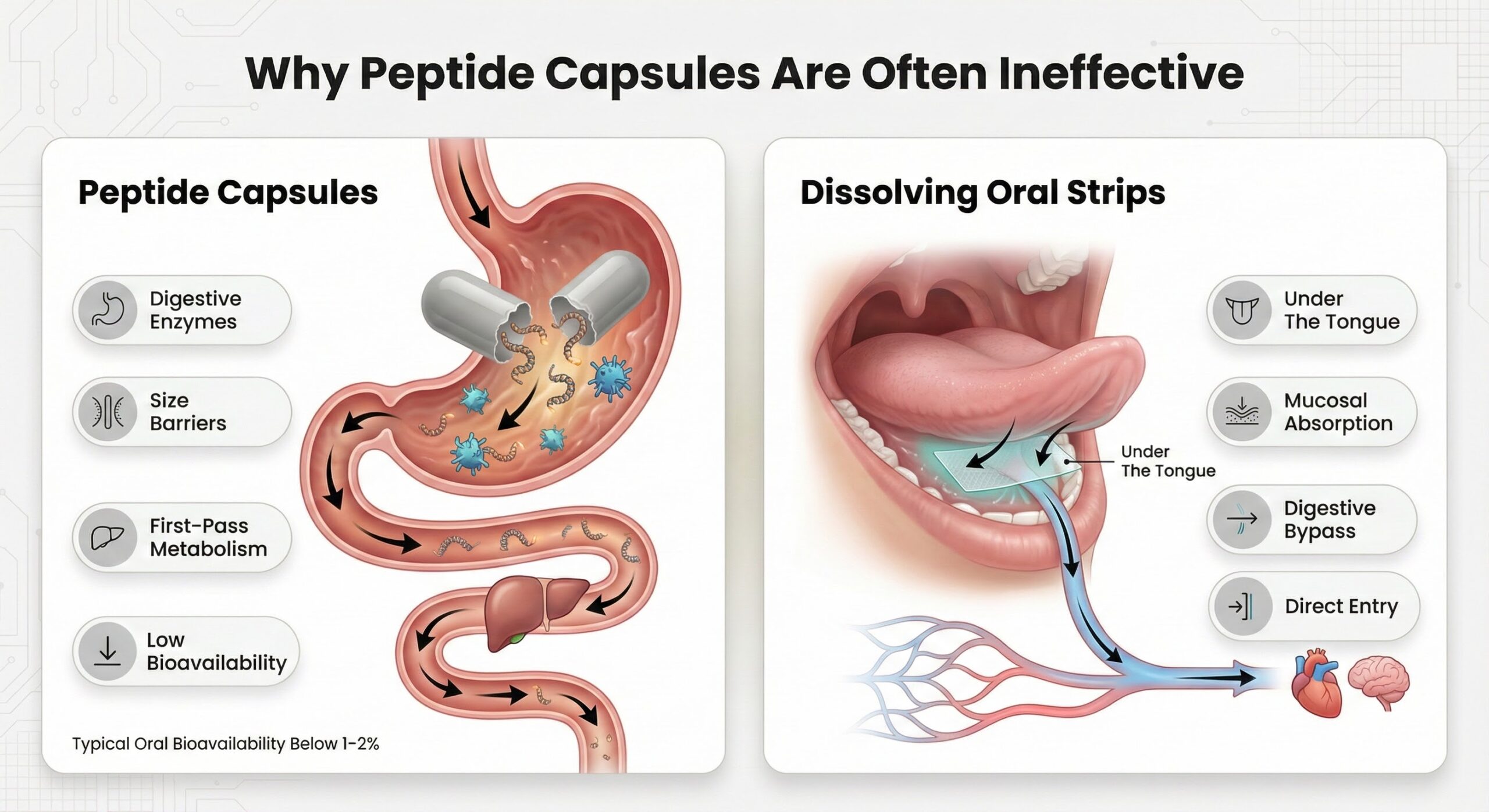
Swallowing a pill forces peptides through an environment designed to disassemble proteins. Gastric pepsin in your stomach, trypsin and chymotrypsin in your small intestine, and cytochrome P450 enzymes in your liver all actively cleave peptide bonds. This cascade of enzymatic activity, called first-pass metabolism, reduces peptide bioavailability to negligible levels—often below 2%.
Sublingual tissue provides a fundamentally different absorption pathway. The mucosa under your tongue is non-keratinized, meaning it lacks the tough protective layer that covers skin. Below this thin epithelial surface sits a dense capillary network that drains directly into systemic circulation through the internal jugular vein. Peptides absorb through this membrane in 1-5 minutes, entering your bloodstream before enzymatic degradation reduces their therapeutic potential.
Why Higher Bioavailability Determines Effectiveness
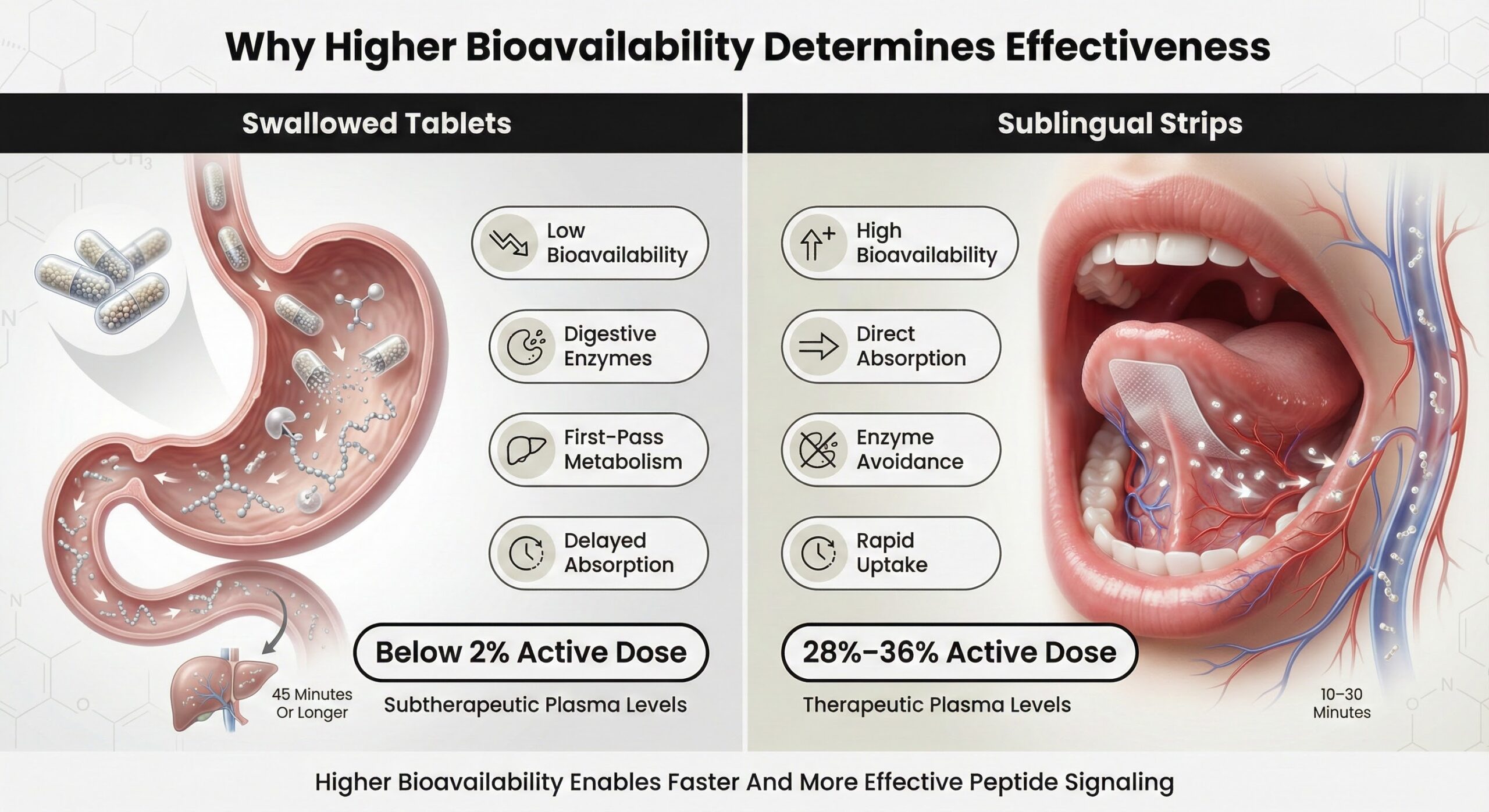
Bioavailability measures the percentage of an administered dose that reaches systemic circulation in active form. For peptides delivered through strips, this typically ranges from 28% to 36%, compared to less than 2% for swallowed tablets. This difference isn't marginal improvement—it's the distinction between therapeutic plasma concentrations and subtherapeutic exposure.
Clinical studies on peptide formulations demonstrate this gap consistently. Oral tablets designed for peptide delivery report bioavailability around 0.7-0.8%, even with advanced formulation technologies. Sublingual films achieve 10 to 50 times higher bioavailability for the same compounds by avoiding digestive degradation entirely.
The speed of absorption creates an additional advantage. Peptides delivered sublingually reach measurable plasma concentrations within 10-30 minutes. Pills require the active ingredient to disintegrate, dissolve in gastric fluid, survive enzymatic breakdown, and absorb through intestinal walls—a process taking 45 minutes or longer. For peptides requiring prompt cellular signaling, this delay reduces effectiveness by allowing degradation to outpace absorption.[2]
Consistency Creates Reliable Outcomes
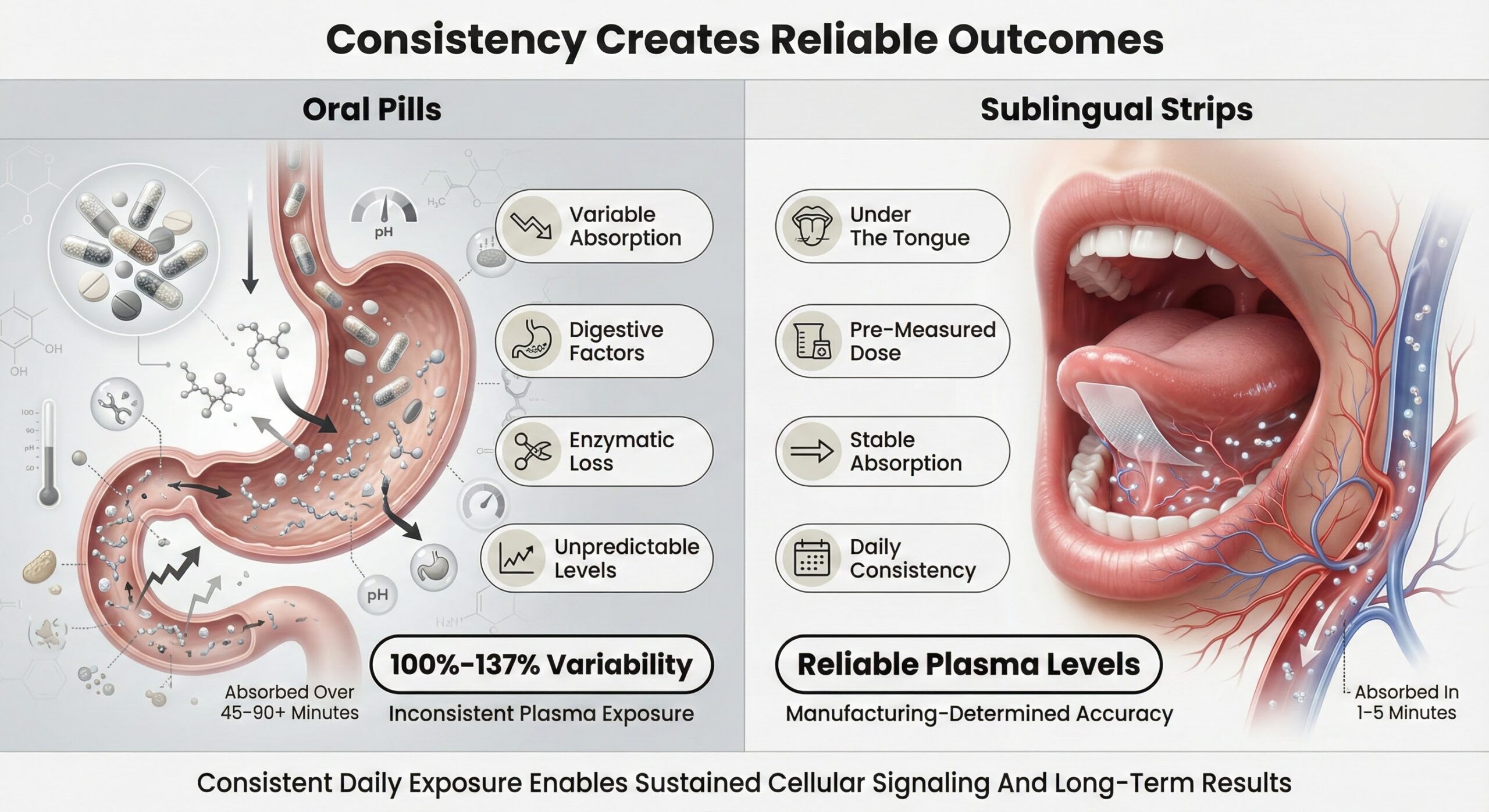
Peptide therapy works through sustained cellular signaling, not isolated exposure. Your cells respond to repeated, predictable plasma concentrations that maintain receptor activation patterns over days and weeks. When absorption varies significantly from day to day, you can't predict whether each dose will produce therapeutic effects.
Pills introduce substantial variability. Factors like stomach pH, food intake, digestive enzyme levels, and intestinal transit time all affect how much of a swallowed peptide survives to reach absorption sites. Studies on oral peptide tablets report within-subject variability of 100-137%, meaning the same person taking the same dose experiences wildly different plasma levels depending on digestive conditions.
Oral strips eliminate most of these variables. Each film contains a precise, pre-measured dose manufactured under controlled conditions. The absorption surface—your sublingual mucosa—remains physiologically stable across administrations. You don't calculate, measure, or time anything relative to meals. The dose accuracy is determined during manufacturing, not during daily use, which removes the primary source of variability.[1]
This consistency matters more for long-term outcomes than dose size. Erratic plasma levels prevent your cells from establishing the sustained signaling patterns that drive metabolic adaptation and tissue repair. Reliable daily exposure at therapeutic concentrations enables the biological responses peptides are designed to trigger.
Why Daily Adherence Determines Results
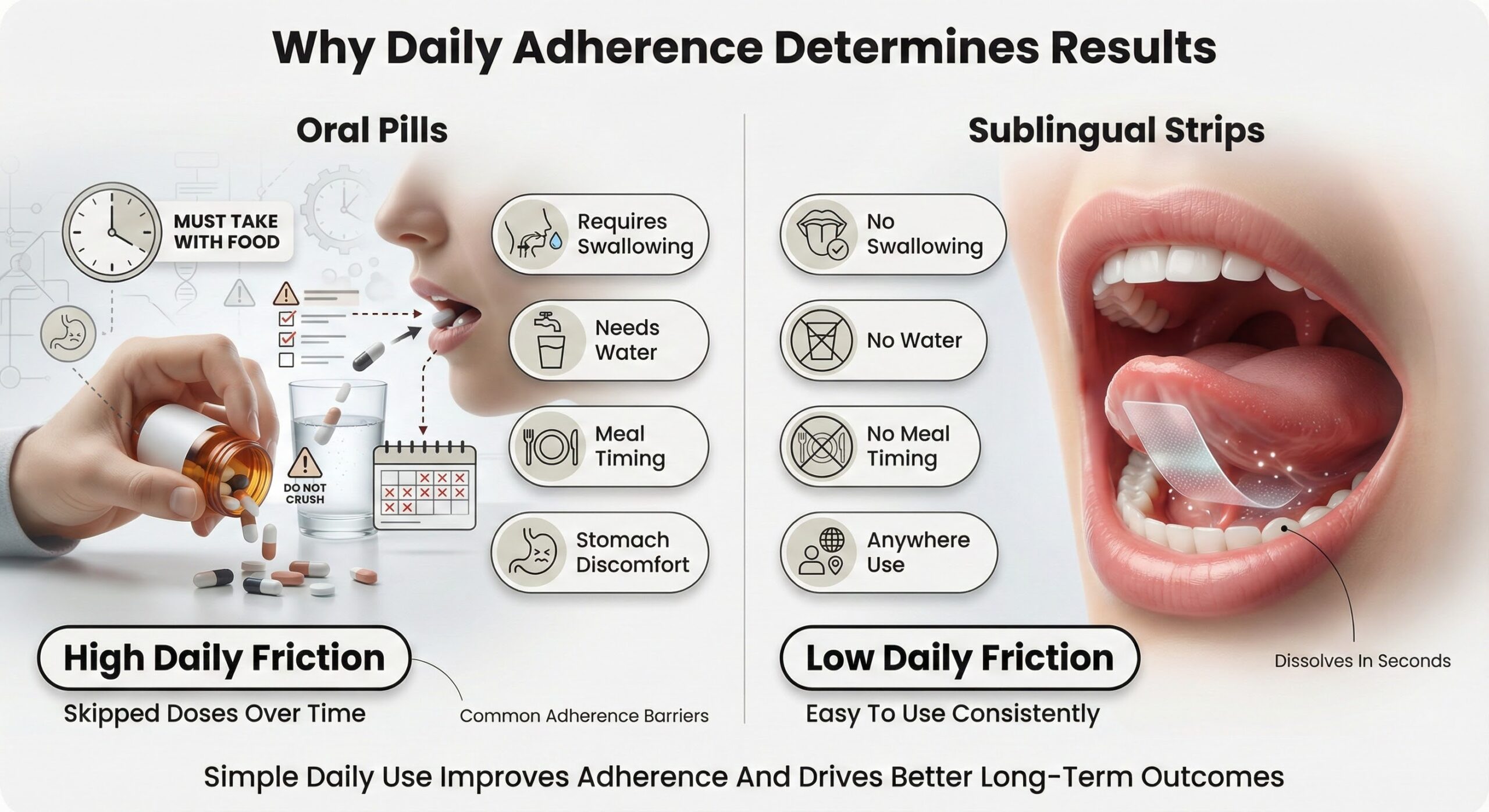
The most effective peptide regimen is the one you actually follow every day. Complexity creates friction—preparing doses, timing relative to meals, managing side effects—and friction erodes consistency over weeks. For delivery methods requiring multiple steps, each additional action point increases the likelihood you'll skip doses when schedules become hectic.
Pills require swallowing, which 43% of children under 12 and 37-60% of older adults find difficult. Even for people without dysphagia, the need for water, concern about stomach upset, and timing restrictions around meals all create barriers to daily use. These aren't minor inconveniences when sustained over months—they're decision points that accumulate into inconsistent adherence.
Oral strips remove these barriers entirely. The film dissolves in 15-30 seconds without water, swallowing, or timing requirements. You can take it anywhere—at work, while traveling, or immediately upon waking. This simplicity translates directly to higher compliance rates, particularly for people who've struggled with traditional oral medications.
When Strips Deliver Therapeutic Advantages
Peptides work when they reach your cells in therapeutic amounts, consistently, over time. Pills fail at the first requirement—most peptides degrade before absorption occurs. Strips succeed by bypassing the enzymatic environment that destroys peptide bonds, delivering 10 to 50 times higher bioavailability through direct mucosal absorption.[2]
The practical result: peptides delivered through strips achieve the sustained plasma concentrations that enable cellular signaling, while pills produce subtherapeutic exposure that doesn't trigger biological responses. The format is simple enough for daily adherence, and the absorption pathway is reliable enough for consistent outcomes.[1]
For peptides designed to support cellular repair, metabolic function, and tissue regeneration, the delivery system determines whether you experience benefits or waste doses on a method that destroys the active ingredient before it reaches your bloodstream.
References
- Bala R et al. "Orally dissolving strips: A new approach to oral drug delivery system." Int J Pharm Investig. 2013. [View Study]
- Baral KC et al. "Barriers and Strategies for Oral Peptide and Protein Therapeutics Delivery: Update on Clinical Advances." Pharmaceutics. 2025. [View Study]
- Bahraminejad S et al. "Sublingual and Buccal Delivery: A Historical and Scientific Prescriptive." Pharmaceutics. 2025. [View Study]
- Bruno BJ et al. "Basics and recent advances in peptide and protein drug delivery." Ther Deliv. 2013. [View Study]
Read More

Preventing Overuse Injuries: The Role of Recovery
March 11, 2026
What GMP Certification Means for Supplement Quality
March 10, 2026
Why Peptide Capsules are Often Ineffective
March 10, 2026