




What Is BPC-157?
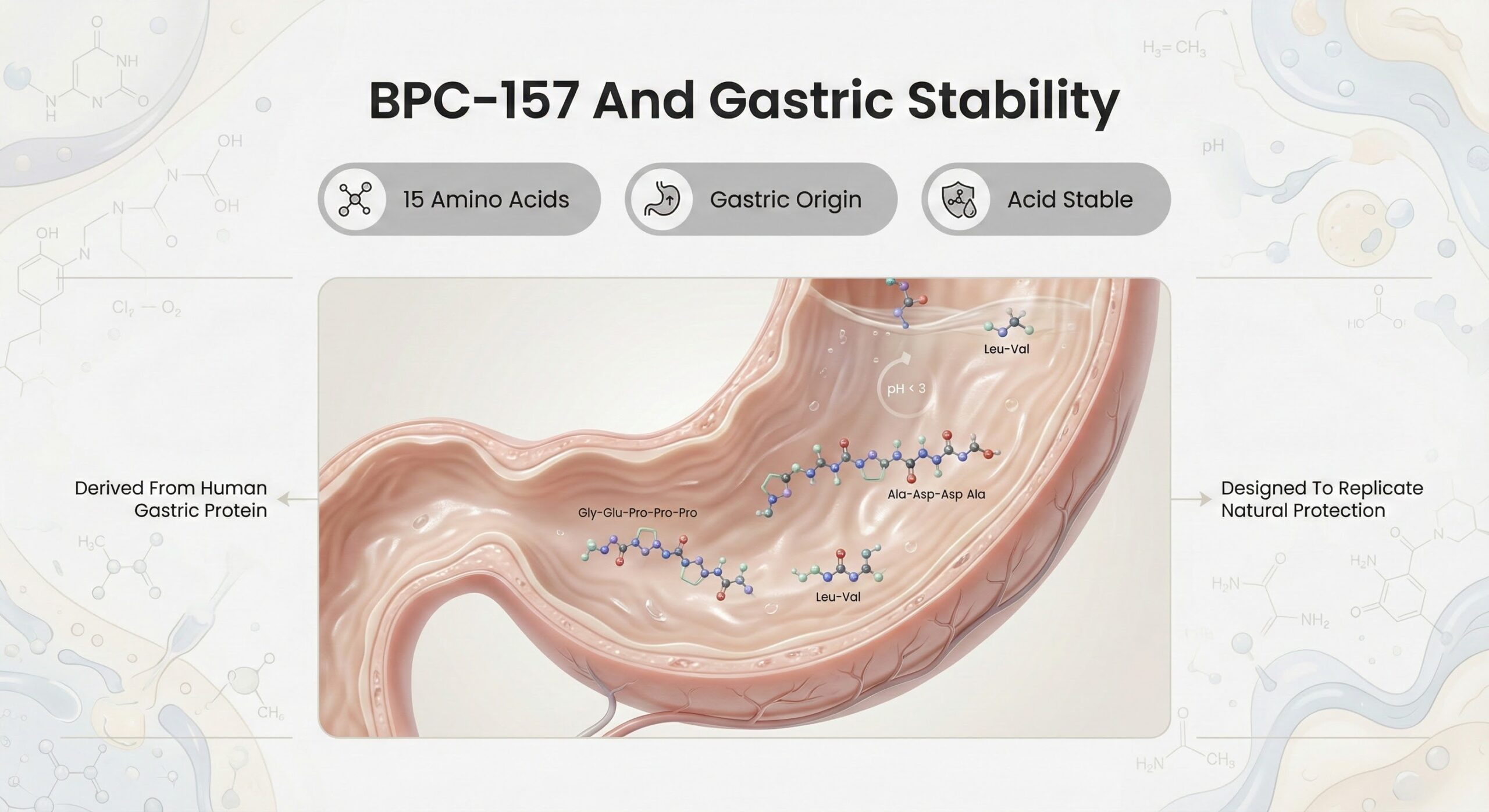
BPC-157 (Body Protective Compound‑157) is a synthetic pentadecapeptide (15 amino acids) that was originally isolated from human gastric juice. In scientific literature, it’s described as a naturally occurring gastric peptide associated with promoting gastric mucosal integrity and homeostasis, which is one reason it has drawn attention beyond digestive health. A key reason BPC-157 is often discussed in oral-use contexts is its reported stability: preclinical work describes it as resistant to hydrolysis and enzyme digestion, and even resistant to gastric juice.[1]
How BPC-157 Promotes Tissue Repair
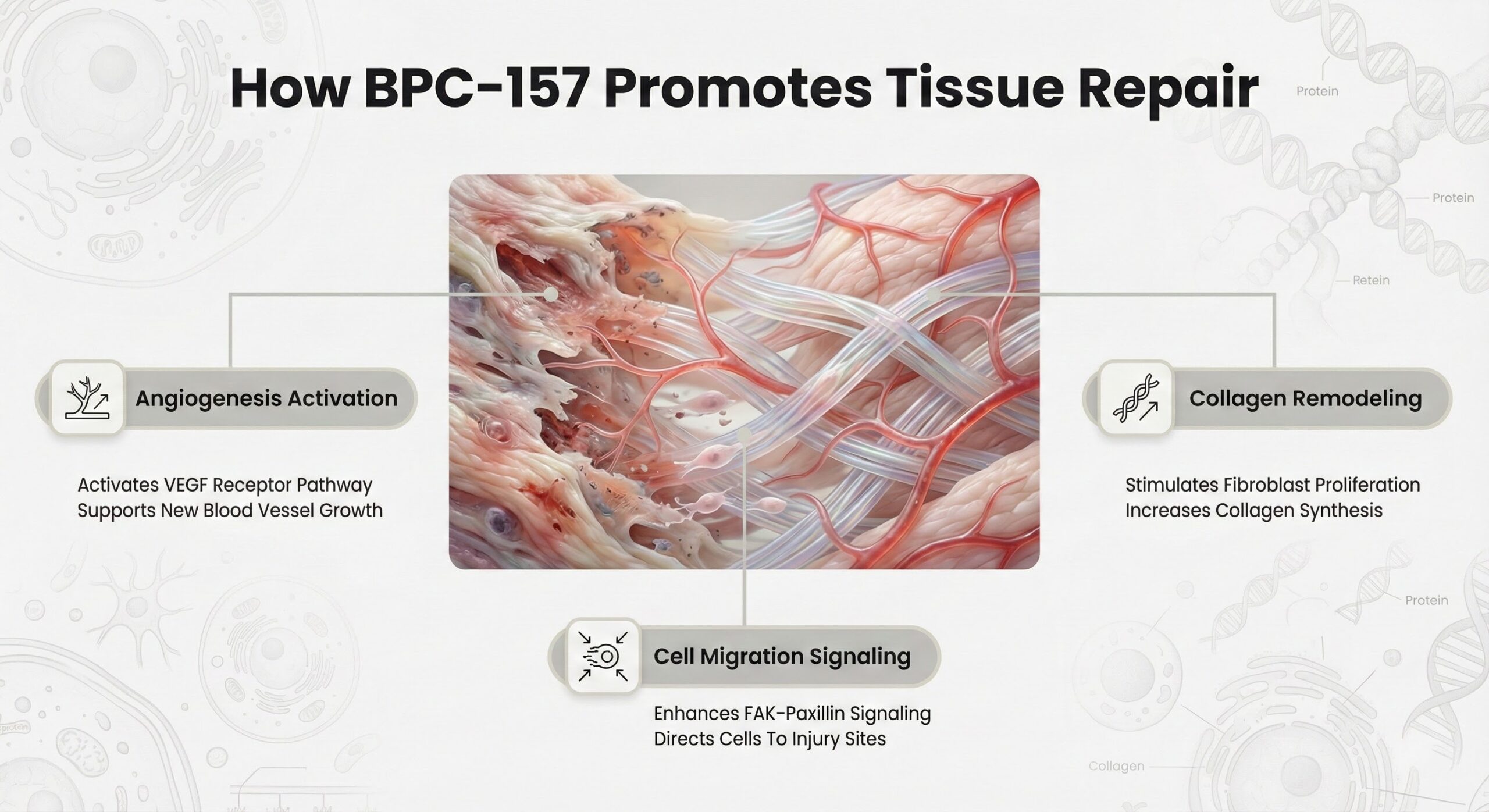
In preclinical models, BPC-157 appears to affect multiple interconnected biological pathways involved in repair and recovery—especially pathways tied to angiogenesis (blood-vessel growth), inflammation, and cell survival. Across the orthopedic and sports medicine-focused review literature, proposed mechanisms include modulation of growth and angiogenic signaling (including VEGF-related activity) and nitric oxide signaling, alongside anti-inflammatory effects. Some studies also suggest BPC-157 influences cellular migration and adhesion processes relevant to tissue repair; for example, one in vitro tendon fibroblast model found associations with increased FAK and paxillin gene expression, which are involved in cell adhesion and migration.
Musculoskeletal and Gastrointestinal Applications
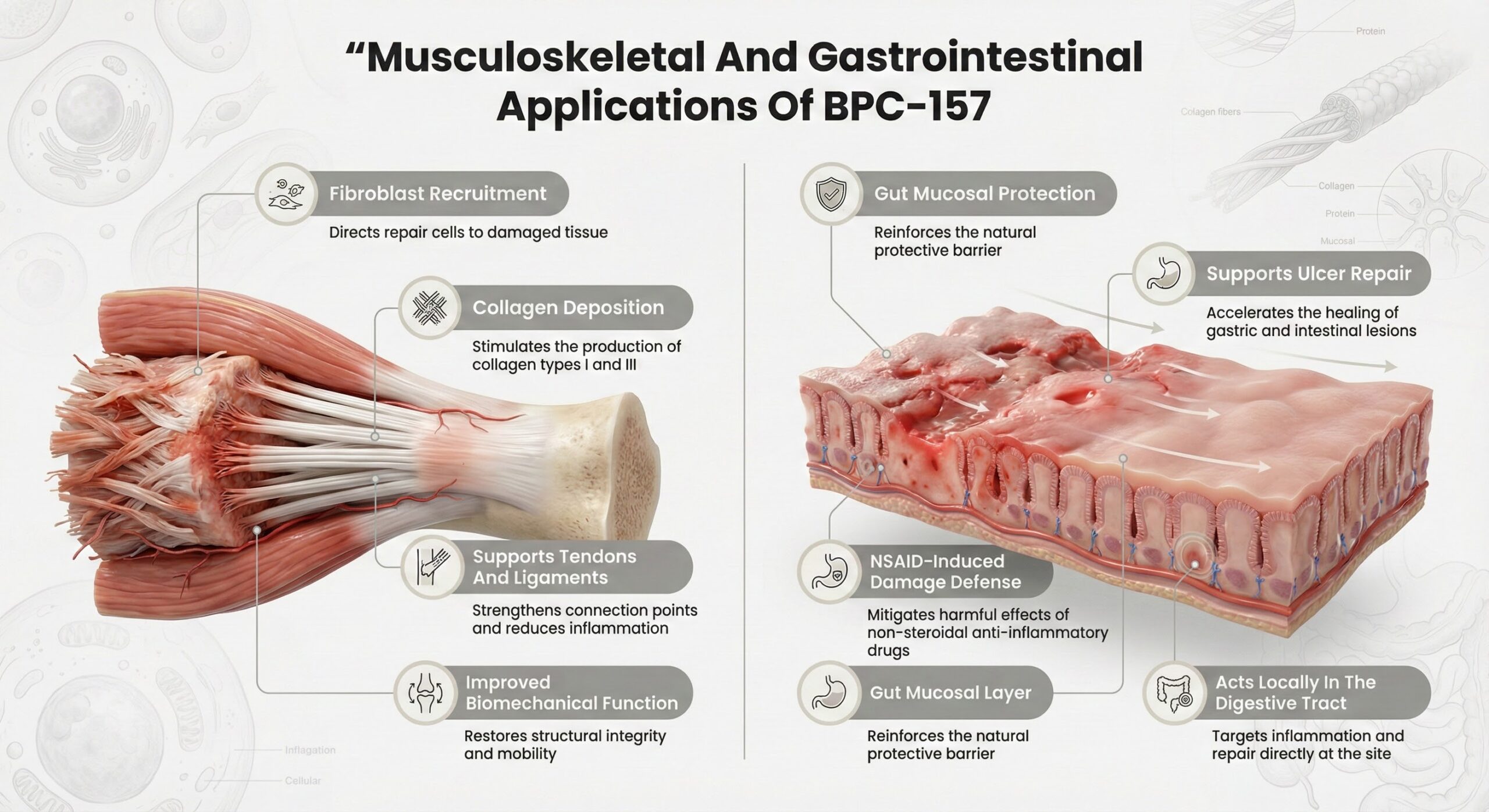
BPC-157 has demonstrated consistent tissue-healing properties across tendon, ligament, and muscle injuries in preclinical studies. The peptide accelerates healing by improving fibroblast recruitment and collagen deposition at damaged sites, making it particularly relevant for injuries with poor natural blood supply, such as tendon-to-bone junctions and ligament tears. Studies using muscle injury models showed that BPC-157 treatment resulted in improved healing outcomes and enhanced biomechanical function compared to untreated controls. For gastrointestinal applications, BPC-157 has demonstrated protective effects against NSAID-induced gut damage and potential for ulcer repair, leveraging its oral stability to act locally within the digestive tract.[2]
Why Daily Consistency Matters
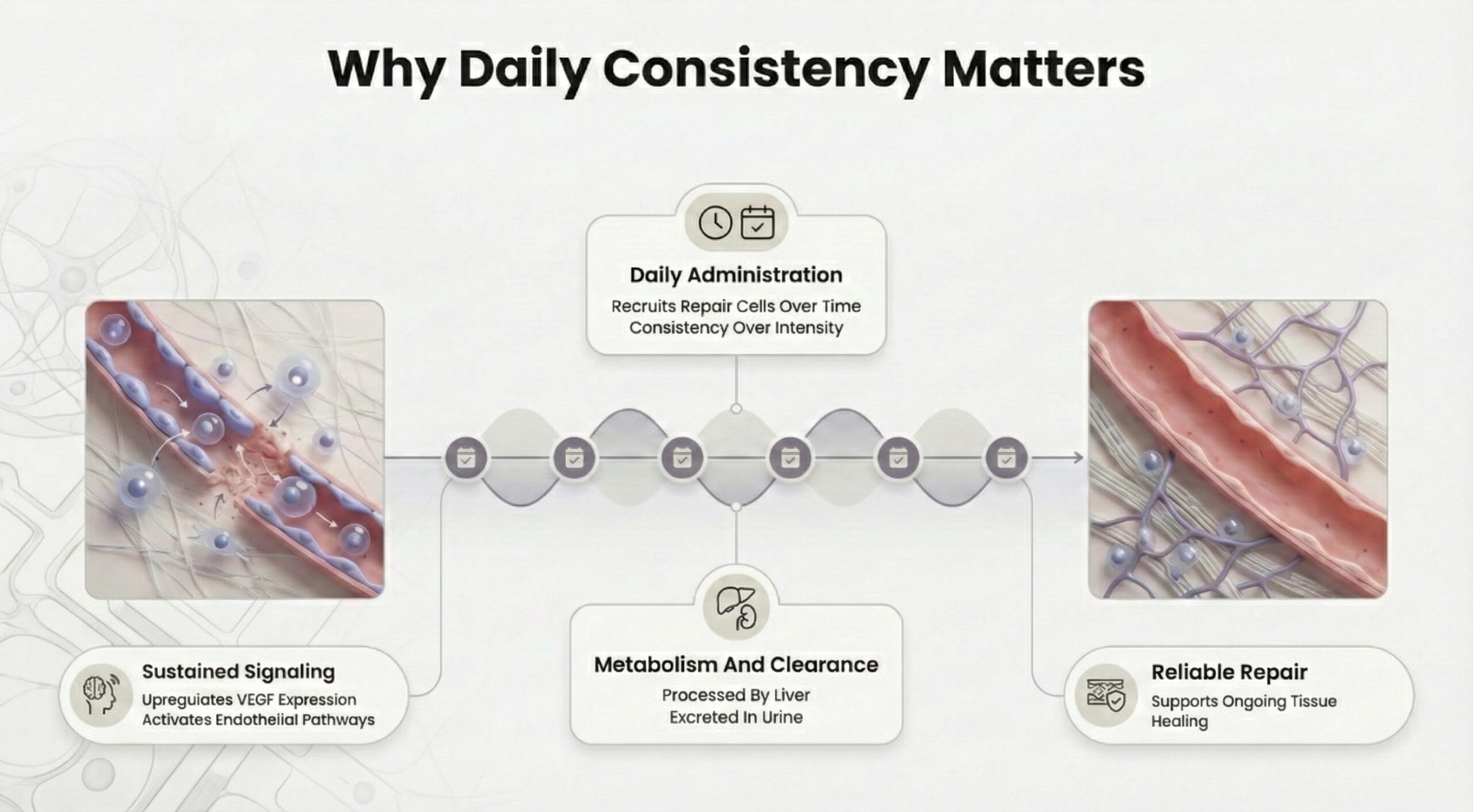
BPC-157's biological effects—upregulating VEGF expression, activating endothelial pathways, recruiting repair cells—rely on sustained signaling rather than maintaining high plasma concentrations. The peptide is metabolized in the liver and excreted in the urine, with consistent daily administration mattering more than peak dosing intensity. This makes adherence to a daily protocol the primary driver of whether tissue repair mechanisms remain reliably activated over time.[1]
Delivery Systems and Practical Use
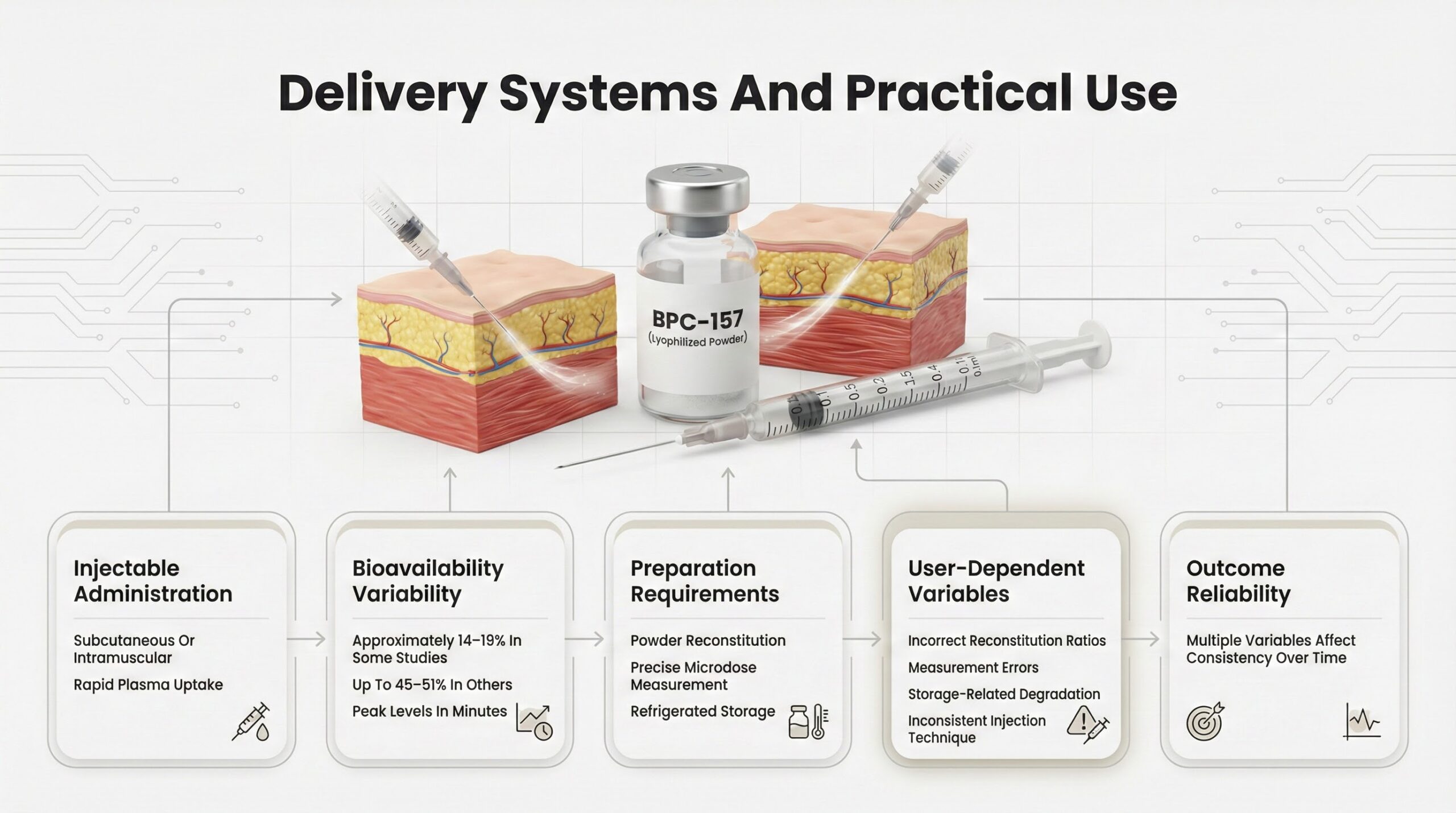
Injectable forms administered subcutaneously or intramuscularly offer bioavailability ranging from approximately 14-19% in some studies to 45-51% in others, with peak plasma levels reached within minutes. However, injectables require reconstitution from powder form, precise measurement of microdoses, proper refrigerated storage, and correct injection technique with site rotation. These requirements introduce multiple opportunities for user error: incorrect reconstitution ratios, measurement mistakes, storage-related degradation, and inconsistent injection practices. Each variable affects whether the peptide delivers its intended benefits reliably over time.[3]

Oral Delivery Systems and Practical Use
Injectable forms administered subcutaneously or intramuscularly offer bioavailability ranging from approximately 14-19% in some studies to 45-51% in others, with peak plasma levels reached within minutes. However, injectables require reconstitution from powder form, precise measurement of microdoses, proper refrigerated storage, and correct injection technique with site rotation. These requirements introduce multiple opportunities for user error: incorrect reconstitution ratios, measurement mistakes, storage-related degradation, and inconsistent injection practices. Each variable affects whether the peptide delivers its intended benefits reliably over time.[3]
References
- Vasireddi N et al. "Emerging Use of BPC-157 in Orthopaedic Sports Medicine: A Systematic Review." HSS J. 2025. [View Study]
- McGuire FP et al. "Regeneration or Risk? A Narrative Review of BPC-157 for Musculoskeletal Healing." Curr Rev Musculoskelet Med. 2025. [View Study]
- He L et al. "Pharmacokinetics, distribution, metabolism, and excretion of body-protective compound 157, a potential drug for treating various wounds, in rats and dogs." Front Pharmacol. 2022. [View Study]
Read More

Preventing Overuse Injuries: The Role of Recovery
March 11, 2026
What GMP Certification Means for Supplement Quality
March 10, 2026
Why Peptide Capsules are Often Ineffective
March 10, 2026